Showing posts with label vegetarian main dish. Show all posts

Thursday, March 31, 2011

Chickpeas with Mango Powder

This recipe calls for mango powder which you can find at a purveyor of Indian spices in your area. I go to Vik’s Chaat Corner in Berkeley, located on Channing Way at Fourth Street. But don’t hesitate to use lime juice instead. Vary the amount of heat in the dish by starting with a small amount of cayenne, tasting the sauce (and waiting for the heat to build), and adding more to your taste. This dish benefits from sitting for a while after being made. The flavor sneaks into the chickpeas with every passing minute. Just reheat gently before serving.


2 tablespoons canola oil
1 teaspoon cumin seeds
1 teaspoon ground cumin
2 black, green or white cardamom pods
1-2 cinnamon sticks, 3 inches long
1 cup canned crushed or diced tomatoes
2 tablespoons mango powder or fresh lime juice
1 tablespoon coriander seeds, ground, or 2 teaspoons ground coriander
1 teaspoon salt or to taste
½ teaspoons cayenne pepper [I used about 1/8 teaspoon]
¼ teaspoon ground turmeric
3 cups cooked chickpeas, canned or cooked from dried beans
1 cup water or chicken stock
4 tablespoons finely chopped cilantro
¼ cup finely chopped red onion

1. Heat the oil in a medium sauté pan over medium high heat. Sprinkle in the cumin seeds, cardamom pods, and cinnamon sticks and cook until they sizzle and smell aromatic, 10 to 15 seconds.
2. Add the tomatoes, mango powder or lime juice, coriander, ground cumin, salt, cayenne, and turmeric. Lower the heat to medium and simmer the sauce, partially covered, stirring occasionally, for 5 to 10 minutes.
3. Stir in the chickpeas, 1 cup water or stock, and 2 tablespoons cilantro. Cover the pan and simmer the sauce, stirring occasionally until the chickpeas absorb the flavors, and the sauce thickens, 20 to 25 minutes.
4. Remove the cinnamon sticks. Sprinkle with the onion and the remaining 2 tablespoons cilantro and serve.

Makes 4 cups
Adapted from Raghavan Iyer’s 660 Curries

Dal with Coconut Milk


1 cup red lentils (masur dal), washed
3 – 4 cups water or mild stock
2 tablespoons canola oil
1½ tablespoons minced garlic or garlic mashed to a paste
¼ cup minced shallots or red onion
6–8 fresh or frozen curry leaves
1 dried red chile or more if you like
1 teaspoon ground coriander
1 teaspoon salt or more to taste
1 cup canned or fresh coconut milk

1. Put the lentils in a medium pot with water or stock. The more liquid you add, the soupier the dish will be. I prefer a thicker dal so I add less liquid. Bring to a boil, reduce the heat to a low simmer, and cook for 20 minutes. Keep warm over low heat.
2. Heat a heavy skillet over medium-high heat. Add the oil and toss in the garlic and shallots or onions and stir-fry for 2 minutes.
3. Add the curry leaves, red chile, and ground coriander, mix well, and cook for another 2 minutes. Stir in the salt and coconut milk. Lower the heat and simmer for 5 minutes.
4. Add this mixture to the hot lentils and simmer for a few minutes to blend the flavors. Serve hot.

Serves 4
Adapted from Jeffry Alford and Naomi Duguid’s Mangoes & Curry Leaves

Red and Yellow Lentils


½ cup yellow lentils, look for little stones and discard
 Note: These could be yellow split peas (chana dal), split pigeon peas (toor dal) or split moong beans (moong dal). All are yellow in color.
½ cup red lentils (masur dal), look for little stones and discard
2 teaspoons cumin seeds
2 lengthwise slices fresh ginger (2 inches x 1 inch x 1/8th inch), finely chopped
2 large garlic cloves, finely chopped
½-1 fresh green Thai, cayenne or Serrano chiles, or more to taste, stems removed
Note: Raghavan calls for 2 to 4 of these chiles. Go for it if you really like hot food.
2 tablespoons ghee or canola oil
1 small red onion, finely chopped
1 large tomato, cored and finely chopped
2 tablespoon finely chopped fresh cilantro leaves and tender stems
2 teaspoons salt or more to taste
½ teaspoon ground turmeric
30 medium-size fresh or frozen curry leaves
Note: These are really good but it is not the end of the world if you have to leave them out.

1. Place both kinds of lentils in a medium-size saucepan. Fill the pan with water and rinse the lentils until the water runs clear. Then add 3 cups water (or stock) and bring to a boil. Skim off and discard any foam on the surface. Reduce the heat to medium-low, partially cover the pan, and simmer, stirring occasionally, until the lentil are tender and soft, 12 to 15 minutes.
2. While the lentils are cooking, combine the cumin seeds, ginger, garlic, and chiles in a mortar,  suribachi or mini-food processor and pound until they are crushed to a gritty, pulp-like paste. Don’t worry if the cumin seeds don’t break up much.
3. Heat a skillet over medium-high heat. Pour in the ghee or oil and immediately add the onion and the spice paste. Stir-fry until the onion is lightly browned and the chiles are pungent, 3 to 5 minutes. Add the tomato, cilantro, salt, turmeric, and curry leaves. Reduce the heat to medium and simmer, uncovered, until the tomato pieces break down, 2 to 3 minutes.
4. When the lentils are cooked, add the sauce and stir once or twice. Pour ½ cup water into the skillet to deglaze it; add the water to the lentils. Reduce the heat to medium low, cover the pan, and simmer stirring occasionally until the lentils have absorbed the flavors, 5 to 7 minutes. Serve hot or warm. You can make this ahead and reheat just before serving.

Makes 4 cups
Adapted from Raghavan Iyer's 660 Curries

Linguine with Lemon Sauce


4 tablespoons butter, at room temperature
1½ cups heavy cream
Grated zest from 3 lemons, see photos below of the zester and the zest
Lemon juice from 3 lemons
1 pound fresh linguine
OR
9 ounces dried thin spaghetti
3 tablespoons salt for the pasta water
1 teaspoon salt for the sauce or to taste
3 tablespoons fresh flat-leaf parsley, coarsely chopped
Parmigiano-Reggiano cheese or other hard cheese, freshly grated at the table

1. Put 6 quarts of water in a large pot and bring it to a boil.
2. While the water is coming to a boil, combine the butter, cream, and lemon juice over low heat in a skillet large enough to hold the pasta later on. As soon as the butter is melted, remove the skillet from the heat, cover, and set aside.
3. When the water is boiling, add 3 tablespoons salt and the pasta, stirring to prevent the pasta from sticking. Cook until tender (fresh pasta won’t take long). Drain, leaving a few drops of water clinging to the pasta so that the sauce will adhere.

4. Transfer the pasta to the skillet, off the heat, and toss to blend. Add the salt, lemon zest, and toss once more. Cover and let rest for 1 to 2 minutes to allow the pasta to absorb the sauce. Transfer to warmed shallow bowls, sprinkle with parsley, and serve immediately. Pass the hunk of cheese with a microplane or a cheese grater for you and your guests to grate as desired.

3-4 servings as a main dish
Adapted from Patricia Wells’ Trattoria

The zester. Of course, you can also use a microplane if you want tiny pieces of zest.
The zest. This is just one lemon's worth.


So great with the silkiness of the pasta:

Simple Sautéed Fresh Spinach or Swiss Chard

Pesto with Pasta


¾ cup freshly grated Parmesan plus more to grate at the table
Note: If you need to grate your Parmesan, do it first in the food processor before proceeding with the rest of the recipe.
4 packed cups fresh basil leaves
2 large garlic cloves, peeled and coarsely chopped
½ cup pine nuts (you can substitute slivered almonds)
2 tablespoons melted butter
1/3 cup olive oil
Salt to taste

1. Combine the cheese, basil, garlic, and nuts in a food processor and process until the mixture is well combined.
2. Add the melted butter with the motor running and up to 1/3 cup olive oil. You can also add a small amount of water if the pesto is too thick. It should drape nicely over a mound of pasta without being runny. Add salt to taste.
3. Serve with hot drained pasta. You can pass more cheese at the table.

4-6 servings
Adapted from Mollie Katzen’s Moosewood Cookbook

Oven-Roasted Tomatoes
Tasty with pesto and a perfect color on the plate.

Spicy Soba with Tofu

Linda, my Berkeley next-door neighbor who now lives in New York City, requested a tofu dish.  This one is excellent.


Dressing:
1/3 cup soy sauce
2 tablespoons packed brown sugar
1 small fresh hot red chile, seeded, deveined, and minced (green is fine too)
1 tablespoon minced fresh ginger root
1 tablespoon minced garlic
1 tablespoon molasses
2 tablespoons sesame oil
3 tablespoon tahini
3 tablespoons balsamic vinegar
3 tablespoons chile oil, optional
Salt to taste

Noodles:
8 ounces dried soba noodles
½ bunch scallions, thinly sliced
12 ounces firm tofu
1 tablespoon olive oil
1 small fresh hot red chile, seeded, deveined, and minced, optional (green is fine too)
4 garlic cloves, minced
½ cup finely chopped fresh parsley
2 tablespoons fresh lemon juice
¼ teaspoon aleppo pepper or other mildly hot pepper or paprika
Salt and pepper to taste

1. To make the sauce, heat the soy sauce in a small saucepan over medium heat. Add sugar, chile, ginger and garlic. Bring to a boil. Reduce the heat to low, stir in the molasses, and heat until warm. Remove from the heat. Whisk in the sesame oil, tahini, vinegar and chile oil, if desired, to combine. Season to taste with salt. Set aside to cool.
2. To make the noodles: Bring a large pot of salted water to a boil. Add the noodles, return to a boil and cook, stirring occasionally, for about 3 minutes or until they are cooked, but still a bit firm. Drain the noodles. Set aside in a large bowl, if you want to serve them warm. Place them in a bowl of ice water if you want to serve them cold.
3. Combine the drained noodles with the dressing and scallions. Toss well. Place on a serving platter or low-sided bowl.
4. Drain the tofu. Pat dry and crumble. Heat the oil in a skillet over medium heat. Add the optional chile and garlic. Cook for 1 to 2 minutes.
5. Increase the heat to medium high and add the crumbled tofu. Stir fry for a few minutes to sear the tofu. Remove from the heat and add the parsley and lemon juice. Season with salt and pepper to taste.
6. Distribute the tofu over the prepared noodles and serve warm or cover and chill to serve cold. Sprinkle with Aleppo pepper or other semi-hot pepper or paprika just before serving.

4 servings
Adapted from The Junior League of Honolulu, Inc.’s Aloha Days, Hula Nights

Menu suggestions:

Cauliflower, Caper and Pumpkin Seed Spread
For the Asian theme, this dip is great served with crispy rice crackers.


Cucumber Salad
Refreshing and so easy.

Wednesday, March 30, 2011

Spinach Quiche

I love this quiche and I don’t care whether quiches are in or out of fashion. If you are not up for making a pie crust, buy one. If you are not up for a pie crust of any kind, make this quiche without one. I have a friend who actually prefers it that way.


1 partially baked 8 or 9-inch pie shell, see recipe below
OR
Purchase one from the supermarket
Note: If the supermarket one comes unbaked, follow the instructions on the wrapper for partial baking or look to the recipe below.
2 tablespoons butter
½ onion, chopped
4 cups finely chopped spinach
OR
1 package frozen chopped spinach, thawed and squeezed dry
1 teaspoon salt
1/8 teaspoon pepper
¼ teaspoon nutmeg
¼ teaspoon smoky sweet paprika
1 cup grated cheese, whatever you like or have on hand cheddar, Swiss, Parmesan or a mix
1¼ cups heavy cream, warmed in the microwave
4 eggs, lightly beaten

1. Preheat oven to 375ºF.
2. Melt the butter in a large skillet and sauté the onion until tender but not browned.
3. Add the spinach, cover and cook for 5 minutes. If you use fresh, you’ll need to chop again. No need to do that if you use frozen. Add the salt, pepper, nutmeg, paprika, and ½ cup cheese.
4. Pour the warm cream slowly over the eggs while beating. Gradually beat in the spinach mixture. Taste for seasonings. Ladle into the pie shell. Sprinkle with the remaining cheese.
5. Bake for 30 minutes or until set. It will take longer for larger pies—45 minutes perhaps. Let sit for 15-20 minutes before serving. Serve warm.

Notes:
For a bigger pie shell, increase the cream to 1¾ cups and the eggs to 5.
If you make this quiche ahead of time (the day or the morning before serving), refrigerate and then reheat at 300ºF. for 20-30 minutes to warm it slightly.

6 servings
Adapted from Craig Claiborne’s The New York Times Menu Cookbook

Pie Crust

For an 8 or 9-inch pie plate or tin:
2 cups flour
1 teaspoon salt
½ cup plus 3 tablespoons (1 stick plus 3 tablespoons) cold unsalted butter, cut roughly into ½-inch pieces
7 tablespoons ice water or more if necessary

1. Combine the flour and salt in the container of a food processor. Add the butter and pulse until the butter and flour are blended and the mixture looks like cornmeal, about 10 seconds.
2. Add the ice water to the mixture. Pulse until you see the mixture coming together. If it doesn’t after a couple of additional pulses, add more ice water, 1 tablespoon at a time, until it does.
3. Dump the contents of the container onto a sheet of plastic wrap and mold it into a ball. Flatten the ballot a disk; bring the plastic up around the dough to cover it completely. Either freeze for 10 minutes or refrigerate for 30 minutes. (You can also refrigerate the dough for a day or two or freeze it almost indefinitely. If frozen, defrost before rolling.)

 4. Sprinkle a smooth countertop or a large board with flour. Unwrap the dough and place it on the work surface; sprinkle the top with a little flour. If the dough is hard, let it rest a few minutes to warm up just a little.


5. Roll with light pressure, from the center out. Continue to roll, adding a small amount of flour as necessary, rotating the dough occasionally, and turning it over once or twice during the process. When the dough is about 1/8-inch thick, place your plate upside down over it to check the size. You want your circle of dough to be about 2-3 inches bigger than the plate it will go into.
6. If the size is correct, move the dough into the pan by folding the dough in half and placing the fold in the middle of the pan. Carefully unfold the dough and press it gently into the outer edge of the plate.
7. Trim (I use scissors) the extra dough about 1 inch above the rim. Fold the dough above the rim in half (to ½ inch) and crimp with your fingers to make a decorative edge. With the scraps, you can fill in any part of the circle that’s missing.
8. Place the plate in the freezer for 10 minutes or the refrigerator for 30 minutes.

Partially Baked Pie Crust

1. Preheat the oven to 400ºF.
2. Prick the dough all over with a fork to help prevent the crust from poufing. (You’ll see what I mean when it happens.)
3. Tear off a large piece of aluminum foil. Press the sheet into the dough, especially on the sides. Weight the foil with a pile of dried beans or rice, pie weights, or a tight-fitting oven-proof skillet or saucepan—anything that will sit flat on the surface and hold the dough in place. Sometimes I just do the foil and don’t weight it with anything and it’s just fine.
4. Bake for 12 minutes. Remove from the oven; remove the weights and foil. If it has poufed, wait for a few minutes for it to settle and then prick the bottom, once again, with a fork.
5. Bake for another 4-5 minutes or so until the crust is just starting to turn a light brown and the bottom looks set.
6. Remove from the oven and cool on a rack.

Adapted from Mark Bittman’s How to Cook Everything: Simple Recipes for Great Food, Julia Child’s Mastering the Art of French Cooking and M.F.K. Fisher’s The Cooking of Provincial France

Here are a couple of suggestions for rounding out this dinner:

Summer Squash Gratin


Italian Lemon Ice

Tomato Cheese Tart


Pie crust for a low-sided 12-inch pizza pan, partially baked and cooled, see recipe below
12 ounces Swiss, Emmenthaler or Gruyere cheese (or other melting cheeses), cut in thin slices
2 or 3 large fresh tomatoes, cut into ½-inch slices
OR
7 medium Oven-Roasted Tomatoes (14 halves)
Salt and pepper
1 teaspoon dried basil
OR
3 tablespoons finely cut fresh basil, see instructions below
¼ cup grated Parmesan cheese
Coarse salt for garnish

1. Sprinkle the fresh tomato slices generously with salt and place them on a cake rack to drain for about 30 minutes. Pat them dry with paper towels.
OR
Drain the roasted tomatoes if they have been sitting in their accumulated liquid.
2. Preheat the oven to 375ºF.
3. Arrange the cheese slices, slightly overlapping, in the bottom of the cooled crust and place the drained or roasted tomatoes side by side on top. Sprinkle with a few grindings of black pepper, the dried or 1 tablespoon fresh basil and the grated Parmesan cheese.
4. Bake in the lower third of the oven for 25 minutes, or until the cheese has melted and the top of the tart is lightly browned. If the top isn’t quite brown enough, you can put the tart under the broiler for a minute or two, watching it carefully.
5. Sprinkle with a bit of coarse salt and the remaining 2 tablespoons of basil chiffonade just before serving. Serve hot or warm.

4-5 servings
Adapted from the Time Life Series Food of the World M.F.K. Fisher's The Cooking of Provincial France

How to Shred Basil (Chiffonade)

1. Stack the basil leaves on top of one another.


2. Roll them tightly lengthwise.


3. Cut the roll crosswise into tiny shreds.
 4. The end result should be a pleasing tangle of basil-y goodness.


  Pie Crust


For a 12-inch pizza pan with low sides:
2 cups flour
1 teaspoon salt
½ cup plus 3 tablespoons (1 stick plus 3 tablespoons) cold unsalted butter, cut roughly into ½-inch pieces
7 tablespoons ice water or more if necessary

1. Combine the flour and salt in the container of a food processor. Add the butter and pulse until the butter and flour are blended and the mixture looks like cornmeal, about 10 seconds.
2. Add the ice water to the mixture. Pulse until you see the mixture coming together. If it doesn’t after a couple of additional pulses, add more ice water, 1 tablespoon at a time, until it does.
3. Dump the contents of the container onto a sheet of plastic wrap and mold it into a ball. Flatten the ball into a disk; bring the plastic up around the dough to cover it completely. Either freeze for 10 minutes or refrigerate for 30 minutes. (You can also refrigerate the dough for a day or two or freeze it almost indefinitely.)
4. Sprinkle a smooth countertop or a large board with flour. Unwrap the dough and place it on the work surface; sprinkle the top with a little flour. If the dough is hard, let it rest a few minutes to warm up just a little.
5. Roll with light pressure, from the center out. Continue to roll, adding a small amount of flour as necessary, rotating the dough occasionally, and turning it over once or twice during the process. When the dough is about 1/8-inch thick, place your pan upside down over it to check the size. You want your circle of dough to be about 2-3 inches bigger than the pan it will go into.
6. If the size is correct, move the dough into the pan by folding the dough in half and placing the fold in the middle of the pan. Carefully unfold the dough and press it gently into the outer edge of the pan.
7. Trim the extra dough about 1 inch above the rim. Fold the dough above the rim in half (to ½ inch) and crimp with your fingers to make a decorative edge. With the scraps, you can fill in any part of the circle that’s missing.
8. Place the pan in the freezer for 10 minutes or the refrigerator for 30 minutes.

Partially Baked Pie Crust

1. Preheat the oven to 400ºF.
2. Prick the dough all over with a fork to help prevent the crust from poufing. (You’ll see what I mean when it happens.)
3. Tear off two pieces of aluminum foil. Press the sheets crossed over each other to conform to the dough, especially on the sides. Weight the foil with a pile of dried beans or rice, pie weights, the bottom of a 12-inch spring-form pan or a tight-fitting skillet or saucepan—anything that will sit flat on the surface and hold the dough in place. Sometimes I just do the foil and don’t weight it with anything and it’s just fine. The pouf goes down.
4. Bake for 12 minutes. Remove from the oven; remove the weights and foil. Prick the bottom, once again, with a fork.
5. Bake for another 4-5 minutes or so until the crust is just starting to turn a light brown and the bottom looks set.
6. Remove from the oven and cool on a rack.

Adapted from Mark Bittman’s How to Cook Everything: Simple Recipes for Great Food, Julia Child’s Mastering the Art of French Cooking and M.F.K. Fisher’s The Cooking of Provincial France.

Papaya Quesadillas with Spicy Tomato Relish


2 tablespoons olive oil
1 fresh jalapeno pepper, red or green, seeded and finely diced
1 large yellow onion, thinly sliced
1 ripe large papaya, seeded, peeled, and diced
Salt and black pepper to taste
5 ounces Asiago cheese or other mild white cheese, shredded
10 10-inch flour tortillas
4 tablespoons butter, softened (or bacon fat if you have some)
Sour cream, for serving
Spicy Tomato Relish, see recipe below

1. Make the Spicy Tomato Relish before you begin the quesadillas.
2. Heat the oil in a skillet (metal or pottery) over medium heat. Add the jalapeno and onion. Sauté 5 to 10 minutes until wilted and slightly golden brown. Stir in the papaya. Season with salt and pepper to taste. Sauté briefly to warm the papaya. Set the pan aside.
3. Butter one side of each tortilla (or use the bacon fat if you’d like). Lay buttered side down in a hot skillet. Cover with one-fifth of the onion/papaya mixture. Sprinkle with about ¼ cup shredded cheese. Top with the second tortilla, buttered side up.
4. When browned on the bottom, carefully turn the quesadilla over to brown the other side using as wide a spatula as you have. If any of the filling falls out in the process, tuck it back inside. Remove from the pan and keep warm in a 250ºF oven on a rimmed baking sheet.
5. Repeat with the remaining tortillas and filling, moving them to the oven as they are done.
6. When done, cut each of the quesadillas in half. Scissors work well. Serve warm with Spicy Tomato Relish and sour cream.

6 servings (if everyone eats about 1½ quesadilla halves)
You may have a little left over for lunch the next day. The cookbook suggests serving this as an appetizer, cutting the quesadillas into wedges, like a pie.
Adapted from The Junior League of Honolulu, Inc.’s Aloha Days Hula Nights

Spicy Tomato Relish


6 ripe tomatoes or 8 Roma tomatoes, seeded and chopped
OR
1 14-ounce can diced tomatoes
2 teaspoons minced fresh ginger root
4 garlic cloves, minced
1 teaspoon curry powder
1½ teaspoon cumin seed
¼ teaspoon fenugreek seed, optional
¼ teaspoon mustard seeds
1 small dried hot red chile
Salt to taste

1. Put the chopped or canned tomatoes, ginger, garlic and curry powder in a saucepan, stirring to mix.
2. In a small skillet over medium heat, toast the cumin, fenugreek, mustard seed and chile pepper until the mustard starts to pop, about 30 seconds to a minute. Add to the tomato mixture.
3. Cook the tomato sauce on medium heat for 20 to 25 minutes, stirring often, until thickened. Season with salt to taste.
4. Remove from the heat. Scrape into a bowl and let cool. Serve warm or at room temperature.

If you have any leftover, you can use as a filling for an omelet.

 Adapted from The Junior League of Honolulu, Inc.’s Aloha Days Hula Nights

Grilled Sharp Cheddar Cheese Sandwiches with Cranberry-Walnut Relish

I almost burned these sandwiches. I pulled them out of the cast iron frying pan just in time. Whew!


10 ounces best quality cheddar cheese, thinly sliced
8 slices good quality firm white bread, such as challah
½-¾ cup Cranberry Walnut Relish with Grappa, see recipe below
OR
Your own chilled cranberry sauce
About 4 tablespoons (½ stick) butter, at room temperature
Note: You can soften the butter in the microwave at 50% power for 1 minute.

1. On a cutting board, set out four slices of bread. Arrange half the cheese over the bread. Spread the relish over the cheese. Top the relish with the remaining cheese and set the remaining slices of bread on top. So it goes bread, cheese, cranberry, cheese, bread.
2. Evenly spread the top of each sandwich with about ½ tablespoon butter. Preheat the griddle or frying pan over medium/low heat. When hot, invert the sandwiches, butter side down, onto the pan. Quickly and evenly spread the tops of the sandwiches with the remaining butter. Cover and cook until the bottom is light golden and crisp, about 2½ minutes. Watch carefully. The sandwiches can burn so quickly.
3. Flip the sandwiches, cover the pan, turn the heat to low and cook until the bottom is golden brown, and the cheese is melting, another 2 to 2½ minutes. Again, watch carefully. Remove from the pan when done.
4. With a serrated knife, cut the sandwiches in half and serve immediately.

4 servings
Adapted from Carrie Brown’s The Jimtown Store Cookbook

Cranberry-Walnut Relish with Grappa
There are many wonderful cranberry relishes. I like this one a lot. You can make this ahead of time and add the walnuts a little before serving.


½ cup walnuts
1 tablespoon finely chopped orange zest
Juice of 1 orange and enough water or apple juice to equal ¾ cup
1 cup sugar
1 12-ounce bag fresh or frozen cranberries
1 tablespoon grappa, optional
½ teaspoon salt or to taste

1. Preheat your oven or toaster oven to 400ºF.
2. Spread the walnuts in a single layer in a shallow metal pan and toast, stirring once, until crisp and lightly browned, about 3 minutes in the toaster oven, 5 to 8 minutes in the big one. Watch the nuts carefully. They can burn in an instant. Cool and coarsely chop.
3. In a medium non-reactive pan, combine the orange juice/water combination and sugar. Set over medium heat and bring to a simmer, stirring to dissolve the sugar. Add the cranberries and simmer, uncovered, stirring once or twice until about half the cranberries have burst, 6 to 8 minutes. Frozen berries will take longer. Transfer to a glass or ceramic container.
4. Stir in the zest, grappa, if using, and salt. Cool to room temperature. The relish will thicken up as it cools.
5. Add the walnuts just before serving. The relish can be used immediately or covered and refrigerated for up to 1 week.

Makes about 2 cups
Adapted from Carrie Brown’s The Jimtown Store Cookbook

Classic Cheddar Cheese Soufflé

When my boys Franz and Ben were growing up, we would have a cheese soufflé every couple of weeks. Making a soufflé often meant that I was running out of food in the fridge—and that, in fact, we were pretty much down to the basics: butter, eggs, milk, and cheese. They would greet the meal with a moan “Soufflé again?” Poor boys. Little did they know that many people would find it an elegant and almost ethereal repast. Last week I served it to a friend who said that it was like eating clouds. Enjoy.


6 eggs
1 teaspoon salt
½ teaspoon dry mustard
Dash cayenne pepper or ¼ teaspoon hot smoky paprika or Aleppo pepper
4 tablespoons butter
¼ cup flour
1½ cups milk, warmed in the microwave
1 cup grated cheddar cheese
OR
½ cup grated Parmesan and ½ cup grated cheddar or whatever mixture you might like

1. Separate the eggs. Put the yolks in a large bowl and the whites in a medium bowl. Add the salt, mustard, cayenne or paprika to the egg yolks and mix well. See instructions for separating eggs if you need them.
2. Melt the butter in a saucepan; blend in the flour. Let bubble, stirring, for a minute or two to cook the flour. Off the heat, add the warm milk, stirring to combine. Return the pan to the heat and cook until thick and smooth, about 5 minutes, stirring regularly. Remove from the heat. Add the cheese and stir until melted.
3. Stir in several large spoonfuls of the sauce to the yolk mixture to temper the yolks. Then add the yolk mixture to the sauce, mixing steadily. Return to the large bowl and set aside to cool for 15 minutes or more.
4. Preheat oven to 400ºF. Butter a 2-quart soufflé dish and dust it with flour.
5. With a perfectly clean wire whisk, hand or electric beaters, whip the egg whites until stiff but not dry.  See instructions for whipping egg whites if you need them. Stir ¼ of the egg whites into the cheese mixture. Then fold in the remaining. Pour into the prepared dish.
6. Bake for 25-30 minutes or until puffed and brown on top. Serve at once.

4 servings, 3 if people are really hungry
Adapted from Mark Bittman’s How to Cook Everything

Tuesday, March 29, 2011

New Wave Salad with Red Wine Basil Vinaigrette

I am always seeking out one-dish meals. And this one is absolutely perfect for the end-of-season gorgeous crops of basil, tomatoes and green beans.


1½ cups Red Wine Basil Vinaigrette, see recipe below
1 pound tender green beans, stringed and cut into thirds
1 tablespoon olive oil
10-12 ounces dried fettuccine or linguine, broken in half
1 cup fresh basil leaves
6 ripe tomatoes, seeded, cut into 1-inch chunks
1 cup pitted Kalamata olives
2 tablespoons chopped fresh parsley
4 ounces Parmesan cheese, in one piece

1. Prepare the Red Wine Basil Vinaigrette.
2. Bring a large pot of salted water to a boil. Add the beans and simmer until just tender, about 5 minutes. Scoop out of the pot, leaving the boiling water. Drain, rinse under cold water, drain again, and set aside.
3. In the same boiling water, add the oil and fettuccine and cook at a rolling boil until just tender. Drain, rise under cold water, and drain again. Turn out onto a clean dry dishtowel and pat dry. Place in a large serving bowl. Add ½ cup of the vinaigrette and toss well. Set aside.
4. Arrange the basil leaves in small stacks and roll them lengthwise. Slice the stacks diagonally into slivers. Or see instructions.
5. Cover the pasta with the green beans and tomatoes, followed by the black olives and slivered basil. Sprinkle with parsley and pour the remaining 1 cup vinaigrette over the salad. Toss gently.
6. Scrape the Parmesan with a vegetable peeler to make thin wide shavings. Place them on top of the salad. When serving, try to distribute a good mix of the ingredients on each plate. You may want to put the Parmesan and the peeler on the table so that you can serve yourself more if you’d like.

4 servings as a one-dish meal
Adapted from Julee Rosso and Sheila Lukins’ The New Basics

Red Wine Basil Vinaigrette

2 cloves garlic, pressed
1 tablespoon Dijon mustard
1/3 cup red wine vinegar
1 teaspoon salt
1 teaspoon black pepper
½ teaspoon sugar
1 cup olive oil
½ cup slivered fresh basil leaves, see instructions
½ cup chopped fresh parsley

1. Combine the garlic, mustard, vinegar, salt, pepper and sugar in a small bowl and whisk well.
2. Add the oil in a slow stream, whisking constantly until the vinaigrette has thickened slightly. Fold in the basil and parsley. Taste for seasonings and adjust as you see fit.

Makes 1½ cups
Adapted from Julee Rosso and Sheila Lukins’ The New Basics

Friday, March 25, 2011

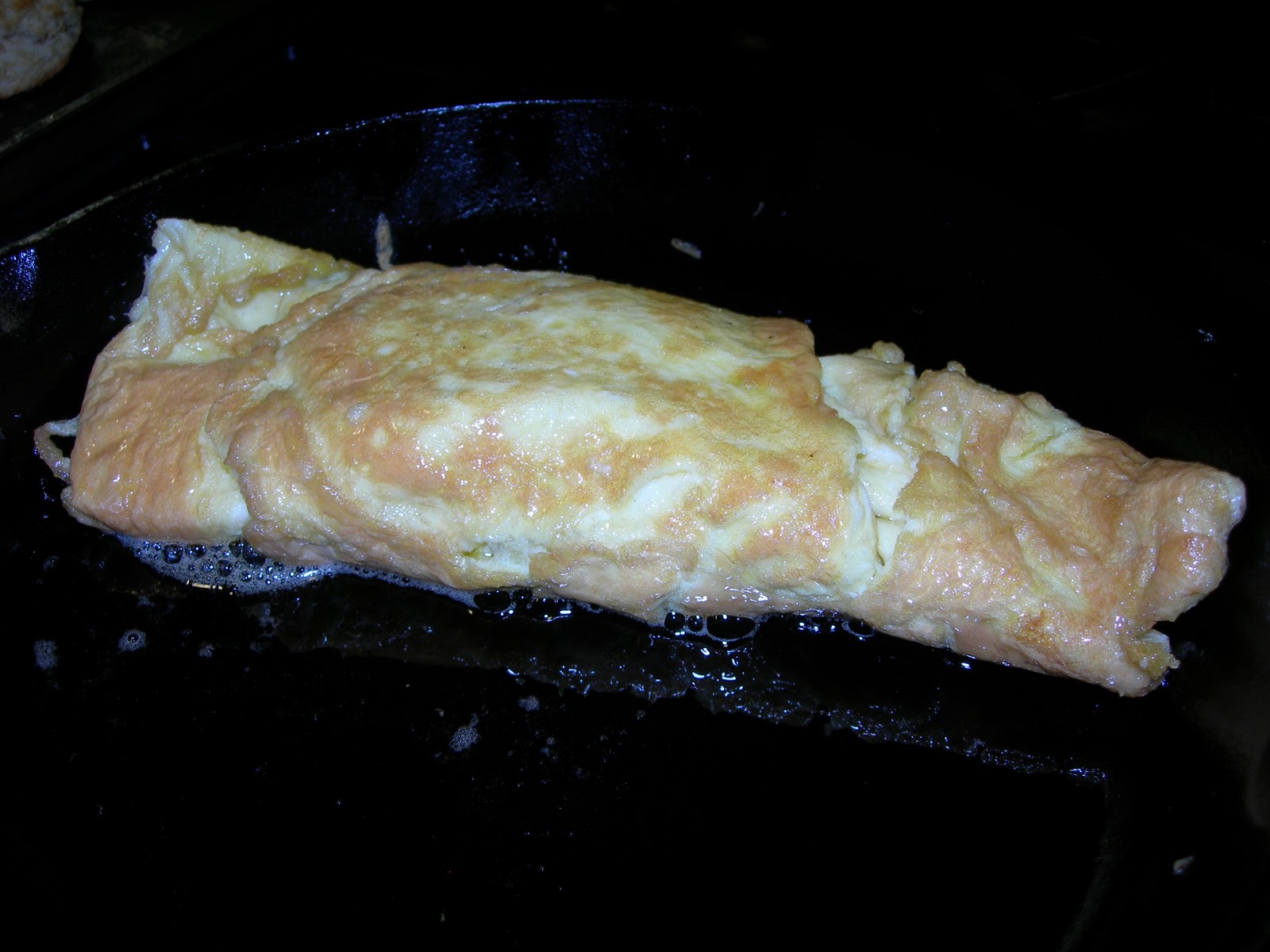
Cheese Omelet


3 or 4 eggs
1 clove garlic, pressed
¼ teaspoon salt and pepper to taste
½-¾ cup grated cheese, cheddar works well
3 tablespoons fresh herbs, like dill, chopped or dried herbs in a pinch, optional
2 green onions, finely chopped, optional
3 tablespoons vegetable oil

1. Break the eggs into a bowl. Add the garlic, salt and pepper. Stir together until they are well combined.
2. Heat the oil in a cast iron frying pan (or an omelet pan, of course) until the oil shimmers and is very hot—but not smoking.
3. Pour in the egg-garlic mixture. It should sizzle and immediately start bubbling around the edges.
4. As the edges firm up, push them to the middle and tilt the pan so that the juicy egg moves to the outside. Keep pushing the sides to the middle until there is no more juicy part to run out. Shake the pan a couple of times to make sure the omelet isn’t sticking. If is it, carefully scoot your spatula underneath to loosen.
Note: I pick up the pan if it seems that the heat is too high. For me this is easier than changing the temp on the burner.

5. Sprinkle the cheese and optional herbs and green onions evenly over the omelet.
6. Fold one side of the omelet about a third across. Then fold over the next third, enclosing the filling. Let it sit for a few minutes with the heat off so that the cheese can melt and the herbs soften.

Note: If you are making omelets for a group, make multiple omelets rather than one or two giant ones. I think that dealing with more than 5 eggs at a time is really hard. When making multiple omelets, put the finished one on a plate in a 250ºF oven while you make the remaining.

2 servings
My own devising, but not original to me of course