Showing posts with label black olives. Show all posts

Monday, April 4, 2011

Fig and Black Olive Tapenade


1 cup stemmed and quartered (about 6 ounces) dried Black Mission figs
1½ cups water
2 cups (1/2 pound) pitted Kalamata or Nicoise olives
Juice of 1 lemon
1½ tablespoons whole grain or smooth Dijon mustard
2 garlic cloves, chopped
1 tablespoon drained capers
2 teaspoons chopped fresh rosemary
2 tablespoons olive oil or more if necessary
Salt and pepper

1. In a heavy medium saucepan, combine the figs and water. Set over medium heat and bring to a simmer. Partially cover and cook, stirring once or twice, until the figs are very tender, about 30 minutes. Cool slightly, drain, reserving 2 tablespoons of the fig cooking liquid.
2. Look the olives over to see if any still has its pit. Remove and proceed. In a food processor, combine the figs, olives, lemon juice, mustard, garlic, capers, rosemary, and reserved 2 tablespoons of fig-cooking liquid. Pulse to create a thick paste. With the motor running, gradually add the oil. Season generously with pepper and add salt to taste, remembering the various salty ingredients.
Note: There is occasionally a pit in the pitted olives. Without having to check each olive before chucking it into the processor, pulse a couple of times at the beginning. You will hear the rattle of the pit. Stop immediately and retrieve it. Pulse another couple of times to make certain you have them all. Then full speed ahead.
3. Transfer to a storage container, cover, and refrigerate at least 24 hours to develop the flavors. But less time in the fridge is OK too.
4. Bring the tapenade to room temperature before serving. Serve with French bread, crackers, or pita chips or, for the gluten-free, rice or lentil crackers or vegetables.

Makes about 2½-3 cups; serves 8-10 as a dip before dinner
Adapted from Carrie Brown’s The Jimtown Store Cookbook

Red Pepper Soup with Olives, Lemon Zest, and Yogurt

Great comfort food. Gorgeous colors.


4 red bell peppers or 5 red gypsy peppers, roasted and skinned, please see instructions if you need them
2 tablespoons olive oil
2 garlic cloves, peeled and sliced
1 small red onion, sliced
4 ripe tomatoes, peeled, seeded (catching the liquid), and chopped, see instructions if you need them
Note: I seed the tomatoes over a sieve placed over a bowl. The seeds drop into the sieve and the liquid falls into the bowl. Periodically I swish the seeds around to release more tomato liquid.
OR
1 14-ounce can diced tomatoes
½ cup thick yogurt
Note: If all you can find is soupy yogurt, line a sieve with two layers or paper towels, place the sieve over a bowl, and pour the yogurt into the sieve. Let it drain until the consistency is as thick as you like it. See photo and instructions.
½ teaspoon Aleppo pepper or smoked or regular paprika
1/3 cup pitted black olives, slivered in quarters
Finely grated zest of one lemon, see photos if you need them
1 tablespoon rosemary [the original recipe calls for this], very finely chopped, but I prefer finely chopped thyme.
A drizzle of olive oil

1. Heat the olive oil in a soup pot and sauté the garlic and onion for about 5 minutes. Add the tomatoes and cook until the mixture begins to bubble. Tear up the roasted peppers as you add them to the pan. Season with salt and pepper.
2. Add 3 cups water, or a combination of the tomato liquid (from seeding the tomatoes), the liquid released by the broiled peppers and enough water to make 3 cups. Bring to a boil, lower the heat, cover, and simmer gently for about 30 minutes.
3. Remove from the heat and purée in a food processor. Return the soup to the soup pot and add the Aleppo pepper. The soup should be fairly thick: if it seems too thin, simmer uncovered for a while longer; if it is too thick, add more liquid. You can let it sit at this point until you’re ready to serve it.
4. Before serving, reheat gently. Check the seasoning and serve the soup hot with a dollop of yogurt, a sprinkling of the olives, lemon zest, rosemary or thyme, and a drizzle of olive oil.

4 servings
Adapted from Tessa Kiros’s Falling Cloudberries: A World of Family Recipes

Moroccan Chicken

Here we are in Morocco in 2004. I'm watching a waiter pour us their famous mint tea from a spectacular height without spilling a drop. I had been cooking Moroccan food for years and years thanks to a Time Life Cookbook called A Quintet of Cuisines. So the food was familiar but this wonderful tea ritual was new.

This chicken dish becomes a favorite of anyone who cooks it.


Spice mixture:
3 cloves garlic, minced
2 tablespoons olive oil
¼ teaspoon ground cinnamon
1½ teaspoons ground cumin
1 teaspoons ground ginger
½ teaspoon paprika
¼ teaspoon pepper
1 teaspoon salt
½ teaspoon ground turmeric

Remainder:
8-9 thighs, skin and extra fat removed (kitchen scissors are great)
2 lemons
1 cup pitted Kalamata olives, cut in half
10 dried dates, pitted and halved or quartered lengthwise

1. Combine all the ingredients for the spice mixture in a large bowl. Add the thighs and coat them well with the mixture. Let the chicken stand, loosely covered, for 1 hour. Can refrigerate for longer, even over night.
2. Place a sauté pan over medium heat and add the chicken, skin side down (I know there is no actual skin). Cover and cook for 20 minutes over low heat; the chicken will cook in its own juices. If the pan gets too dry, add a tablespoon or 2 of water or chicken stock.
3. Zest the 2 lemons, avoiding the bitter white pith as much as possible.
4. Turn the thighs over and sprinkle them with the lemon zest, olives, and dates. Cover and cook another 10 minutes, adding a small amount of water if the mixture is at risk of burning. Serve immediately.

4-6 servings
Adapted from Julee Rosso and Sheila Lukins’ The New Basics Cookbook 

Couscous Salad with Apricots, Pine Nuts, and Ginger


Cucumbers with Yogurt and Mint
 

Thursday, March 31, 2011

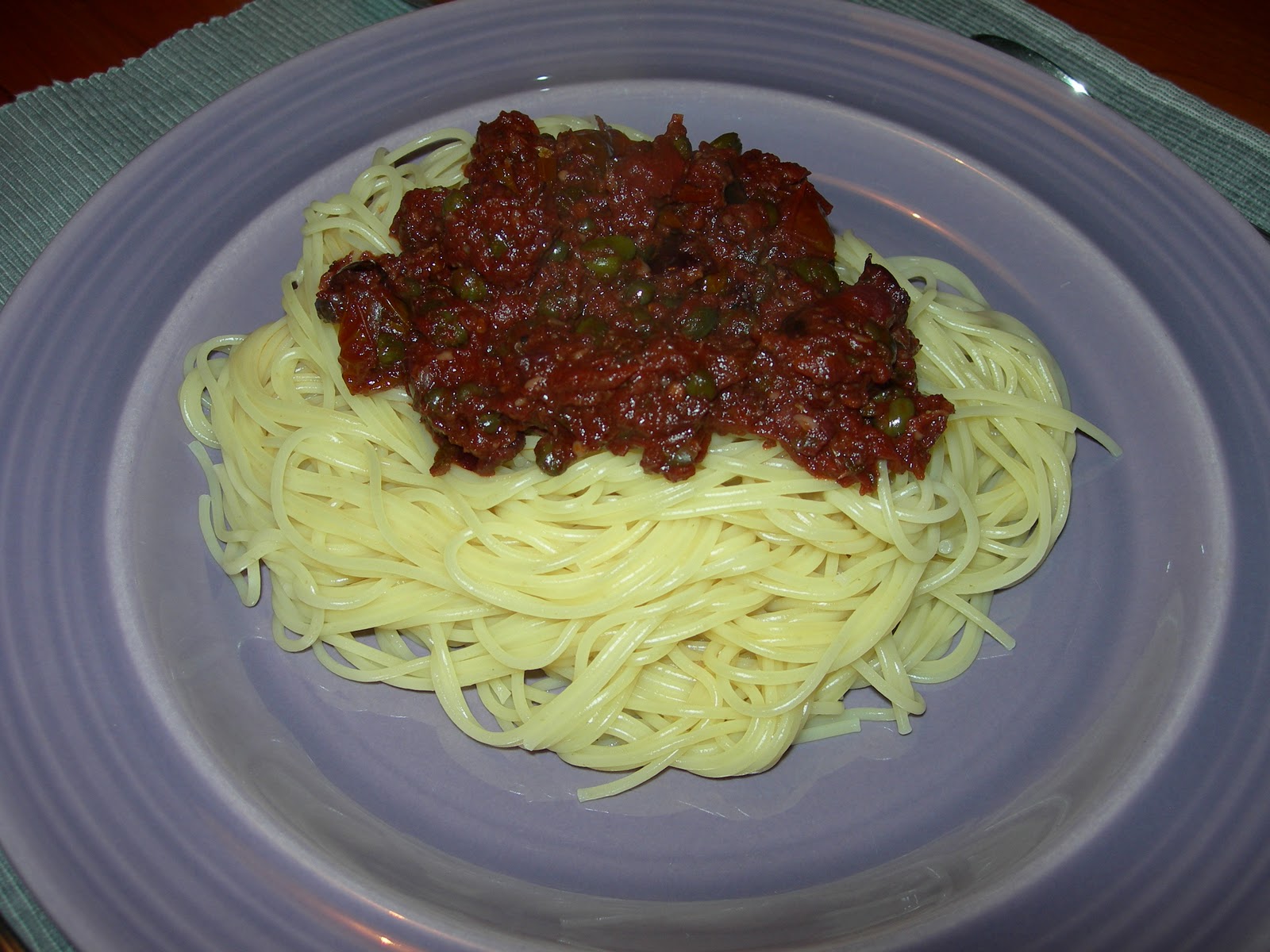
Puttanesca Sauce


1 can (2 ounces) anchovy fillets, undrained
12 garlic cloves, pressed
2 cans (28 ounces each) plum tomatoes
OR
4 pounds fresh tomatoes, peeled, seeded saving the juice, see instructions if you need them, coarsely chopped
¼ cup sun dried tomatoes, chopped
1/3 cup capers, drained
1 cup pitted Kalamata olives, coarsely chopped
1 cup dry red wine
Crushed red pepper flakes to taste
½ teaspoon sugar
2 tablespoons fresh sage, chopped
¼ cup balsamic or red wine vinegar
Pepper

1. Place the anchovies and the garlic in a heavy large sauce pan or sauté pan. Mash thoroughly into a paste over low heat. Use a knife and fork to cut into pieces if necessary.
2. Add the tomatoes, capers and olives; stir over medium high heat.
3. Add the remaining ingredients and bring to a boil; reduce the heat to medium low and simmer, uncovered, for 1 hour. With fresh tomatoes and their juice, it might take two hours depending on their juiciness. The sauce should be nice and thick.
4. Taste and adjust the seasonings. Serve over thin spaghetti. Traditionally this dish is served without cheese, but who’s stopping you if you want it.

Note: You probably won’t need salt because of the saltiness of the anchovies, capers and olives. But taste to make sure.

6 servings
Adapted from Julee Rosso’s Great Good Food

Wednesday, March 30, 2011

Salmon with Swiss Chard

This is perhaps my favorite fish dish in the world. I have had a hard time getting a good photo of it. The last time I made it, I was so eager to dig into it that I forgot to take a picture until the dish was in shambles: messy, half-eaten, unappetizing. So at last I have a photo that is good enough. You will love this dish—or at least I hope so.


2 pounds Swiss chard, red or green, about 2 bunches
5 ounces pitted Kalamata black olives
1½ pounds salmon fillets, cut into serving size pieces, skin removed if you desire

Marinade (chermüla):
5 garlic cloves, crushed
1 small onion, thinly sliced
1 cup chopped cilantro leaves
1 teaspoon ground cumin
½ teaspoon paprika or smoky sweet paprika
¼ teaspoon ground chile molido or any chile powder
3 tablespoons olive oil
Juice of 2 lemons
1 teaspoon salt

1. Remove the stems from the chard; save for another purpose or compost. Wash the leaves very well to remove all the dirt and cut into ½-inch strips.
2. Put it and the olives in the top of a steamer. Cover and steam over high heat for 5-10 minutes or until the chard is al dente. Remove from the heat. Take off the lid, cover with a cloth, and leave the chard to cool.
Note: You can do this step the day before you’re making the dish, preferably before trying to stuff the unwieldy bunches of chard into your fridge.
3. Combine all the ingredients in the marinade. Rub it all over the fish and leave to marinate for at least 2 hours in a cool place. Less time is fine too.
4. When you are ready to roast the fish, spread the chard and olives on the bottom of a baking dish. Place the salmon fillets on top of the chard, skin side down, surrounded by the marinade. Pour the liquid of the marinade over everything.
5. Roast at 425ºF for about 30 minutes, checking after 25 minutes to see if the fish is done to your liking. The time depends on the thickness of the fish fillets.
6. Serve with bread to mop up the delicious sauce.

4-6 servings
Adapted from Anissa Helou’s Street Café Morocco

Tuesday, March 29, 2011

New Wave Salad with Red Wine Basil Vinaigrette

I am always seeking out one-dish meals. And this one is absolutely perfect for the end-of-season gorgeous crops of basil, tomatoes and green beans.


1½ cups Red Wine Basil Vinaigrette, see recipe below
1 pound tender green beans, stringed and cut into thirds
1 tablespoon olive oil
10-12 ounces dried fettuccine or linguine, broken in half
1 cup fresh basil leaves
6 ripe tomatoes, seeded, cut into 1-inch chunks
1 cup pitted Kalamata olives
2 tablespoons chopped fresh parsley
4 ounces Parmesan cheese, in one piece

1. Prepare the Red Wine Basil Vinaigrette.
2. Bring a large pot of salted water to a boil. Add the beans and simmer until just tender, about 5 minutes. Scoop out of the pot, leaving the boiling water. Drain, rinse under cold water, drain again, and set aside.
3. In the same boiling water, add the oil and fettuccine and cook at a rolling boil until just tender. Drain, rise under cold water, and drain again. Turn out onto a clean dry dishtowel and pat dry. Place in a large serving bowl. Add ½ cup of the vinaigrette and toss well. Set aside.
4. Arrange the basil leaves in small stacks and roll them lengthwise. Slice the stacks diagonally into slivers. Or see instructions.
5. Cover the pasta with the green beans and tomatoes, followed by the black olives and slivered basil. Sprinkle with parsley and pour the remaining 1 cup vinaigrette over the salad. Toss gently.
6. Scrape the Parmesan with a vegetable peeler to make thin wide shavings. Place them on top of the salad. When serving, try to distribute a good mix of the ingredients on each plate. You may want to put the Parmesan and the peeler on the table so that you can serve yourself more if you’d like.

4 servings as a one-dish meal
Adapted from Julee Rosso and Sheila Lukins’ The New Basics

Red Wine Basil Vinaigrette

2 cloves garlic, pressed
1 tablespoon Dijon mustard
1/3 cup red wine vinegar
1 teaspoon salt
1 teaspoon black pepper
½ teaspoon sugar
1 cup olive oil
½ cup slivered fresh basil leaves, see instructions
½ cup chopped fresh parsley

1. Combine the garlic, mustard, vinegar, salt, pepper and sugar in a small bowl and whisk well.
2. Add the oil in a slow stream, whisking constantly until the vinaigrette has thickened slightly. Fold in the basil and parsley. Taste for seasonings and adjust as you see fit.

Makes 1½ cups
Adapted from Julee Rosso and Sheila Lukins’ The New Basics

Monday, March 28, 2011

Orange and Black Olive Salad

The oranges on the tree outside my kitchen window are pretty sparse this year. I had my trees trimmed at precisely the wrong time—when the fruit was just forming. But trimming was exactly what the tree needed to make abundant fruit next year—if I can just hold on. The store-bought varieties are quite flavorful so I can still make this wonderful winter salad.


 6 navel or temple oranges, peeled and sectioned, see instructions if you need them
1 cup pitted Kalamata or other black olives
2 tablespoons olive oil
2 cloves garlic, chopped or pressed
1 teaspoon sweet smoky paprika
¼ teaspoon hot smoky paprika
1 teaspoon salt
1 teaspoon sugar
½ teaspoon ground cumin
2 tablespoons chopped parsley

1.  Squeeze the juice from the leftover membranes into the bowl with the oranges. Refrigerate if you are not continuing to make the salad. You can peel and section the oranges the day before if you like.
2. Just before serving, drain the oranges, saving the juice. Arrange the olives and the oranges on a serving dish.
3. Make a dressing of the olive oil and the remaining ingredients, except the parsley; pour it over the olives and oranges. Add some of the reserved juice if the oranges need a bit more sauce; you can drink the rest. Sprinkle with parsley and stir in slightly. Serve at once.

4-6 servings
Adapted from Paula Wolfert’s Couscous