Showing posts with label tomatoes. Show all posts

Monday, April 4, 2011

Jane's Bacon and Lentil Soup


¾ cup small red lentils
1 bay leaf
4 cups stock or water
10-12 slices thick smoked bacon (10-12 ounces uncooked), cut crosswise into ½-inch pieces
1 small onion, finely diced
1 small carrot, peeled and finely diced
You can add some fennel and some red and yellow pepper, chopped, if you have them on hand
1 garlic clove, minced or pressed
1 can (14 ounces) diced tomatoes
OR
1 large beefsteak tomato or comparable smaller ones, peeled, cored, seeded, saving the juice and adding it to the soup. See instructions below.
½ teaspoon dried oregano
½ teaspoon cumin
2 tablespoons coarsely chopped fresh mint, plus more for garnish
Salt and pepper to taste
1 green onion, both white and green parts, thinly sliced
Sour cream or crème fraiche, optional

1. In a medium saucepan, stir together the lentils, bay leaf, and stock or water. Bring to a boil, reduce the heat and simmer until the lentils are soft, about 20 minutes. They will change from an orange color to a muddy yellow—do not be alarmed.
2. In a soup pot, cook the bacon pieces over low to medium heat, turn as needed to brown but not crisp. Remove from the pan, leaving the bacon fat. If there is a large amount of bacon fat, you might want to pour some of it into a container to save for another use. Leave 1-2 tablespoons in the pot.
3. Add the onions to the soup pot and sauté over medium heat until tender and starting to brown, about 8-10 minutes.
4. Add the tomatoes, the cooked lentil mixture, ¾ of the bacon (save some for a garnish), the oregano, cumin, and mint and stir until mixed. Season with salt and pepper to taste. Simmer for 10 minutes. Remove the bay leaf. Adjust seasonings to suit you.
5. Ladle into bowls. Garnish each serving with the sliced green onion, bacon and sour cream, if desired.

4-5 servings
Adapted from Sara Perry’s Everything Tastes Better with Bacon

Lemon Cornbread 
This cornbread is delicious with the soup.


How to peel and seed tomatoes

Some recipes will call for peeling alone, leaving the seeds. Some will call for seeding alone, leaving the skin in tact. Here are instructions for the whole process which you can modify as you see fit.

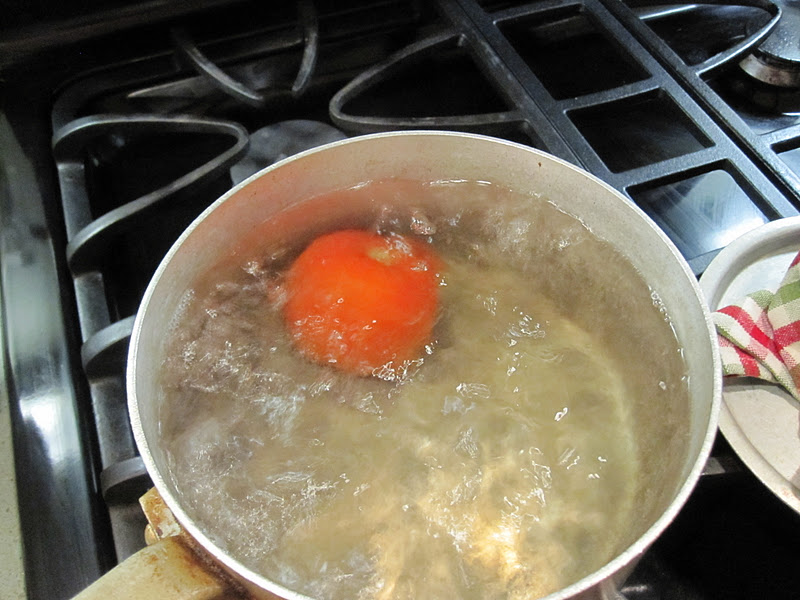
1. To peel the skin, drop the tomato into boiling water for 10-15 seconds depending on how ripe it is. Remove it from the water.
2. Slit the skin and peel it off. Remove the core (where the stem was growing).
3. To seed the tomato, slice in half around the equator. Place a small sieve over a bowl or pitcher.
4.With your finger, remove as many of the seeds as you can into the sieve, allowing the liquid which comes out with them to drain into the bowl. It is, to my mind, precious tomato juice.

Red Pepper Soup with Olives, Lemon Zest, and Yogurt

Great comfort food. Gorgeous colors.


4 red bell peppers or 5 red gypsy peppers, roasted and skinned, please see instructions if you need them
2 tablespoons olive oil
2 garlic cloves, peeled and sliced
1 small red onion, sliced
4 ripe tomatoes, peeled, seeded (catching the liquid), and chopped, see instructions if you need them
Note: I seed the tomatoes over a sieve placed over a bowl. The seeds drop into the sieve and the liquid falls into the bowl. Periodically I swish the seeds around to release more tomato liquid.
OR
1 14-ounce can diced tomatoes
½ cup thick yogurt
Note: If all you can find is soupy yogurt, line a sieve with two layers or paper towels, place the sieve over a bowl, and pour the yogurt into the sieve. Let it drain until the consistency is as thick as you like it. See photo and instructions.
½ teaspoon Aleppo pepper or smoked or regular paprika
1/3 cup pitted black olives, slivered in quarters
Finely grated zest of one lemon, see photos if you need them
1 tablespoon rosemary [the original recipe calls for this], very finely chopped, but I prefer finely chopped thyme.
A drizzle of olive oil

1. Heat the olive oil in a soup pot and sauté the garlic and onion for about 5 minutes. Add the tomatoes and cook until the mixture begins to bubble. Tear up the roasted peppers as you add them to the pan. Season with salt and pepper.
2. Add 3 cups water, or a combination of the tomato liquid (from seeding the tomatoes), the liquid released by the broiled peppers and enough water to make 3 cups. Bring to a boil, lower the heat, cover, and simmer gently for about 30 minutes.
3. Remove from the heat and purée in a food processor. Return the soup to the soup pot and add the Aleppo pepper. The soup should be fairly thick: if it seems too thin, simmer uncovered for a while longer; if it is too thick, add more liquid. You can let it sit at this point until you’re ready to serve it.
4. Before serving, reheat gently. Check the seasoning and serve the soup hot with a dollop of yogurt, a sprinkling of the olives, lemon zest, rosemary or thyme, and a drizzle of olive oil.

4 servings
Adapted from Tessa Kiros’s Falling Cloudberries: A World of Family Recipes

Warm Cream of Tomato Soup

This may be one of the easiest soups in the world and one of the few places where spaghetti sauce in a jar works beautifully.


1 tablespoon butter or olive oil
1 large onion, minced
4 garlic cloves, minced or pressed
1 cup red wine
1 48-ounce jar good-quality, non-meat spaghetti sauce
1 28-ounce can diced tomatoes, with juices
½ cup finely chopped fresh basil or 2 tablespoons dried
Note: Save out a little of the fresh, if you are using it, for garnish before serving
2 cups half and half
1 cup heavy cream
Salt and pepper to taste

1. Heat the butter in a soup pot. Add the garlic and onions and sauté until they are golden.
2. Pour in the red wine and simmer for 5 minutes.
3. Add the spaghetti sauce, tomatoes, and half of the fresh or dried basil; simmer very slowly uncovered for 1 hour.
4. Add the half and half and the heavy cream; continue to simmer over low heat for a few more minutes. Do not let the soup boil. Add the remaining fresh or dried basil, salt and pepper to taste.
5. Ladle into soup bowls, sprinkle with the fresh basil, and serve immediately.

10 servings
Adapted from Joan Nathan’s The New American Cooking

1991: A Cold Moroccan Tomato Soup

I am inclined to try any recipe that has Morocco in the title. This was no exception. The result was well worth the effort. But faulty instructions in the original made the task more arduous than necessary. (A food mill with a large disk is no help whatsoever in removing tomato seeds; they go right through. Plus my tomatoes were reluctant to join the seeds in the bowl. So I found another approach—the Cuisinart.) I have worked out the instructions, at least to my own satisfaction, and now I’m ready to pass this delicious soup along to you. It is best made with good tomatoes, if it can ever stop raining or get warmer or get cooler. Take your pick depending on where you are in the country.


5 medium clove garlic, smashed, peeled and minced
2½ teaspoons sweet paprika or sweet smoky paprika
1½ teaspoons ground cumin
Large pinch of cayenne
4 teaspoons olive oil
2¼ pounds tomatoes, skinned and cored, see instructions if you need them
¼ cup packed chopped cilantro leaves, plus more for garnish
1 tablespoons white wine vinegar
Zest of 1 lemon, see photos if you need them
2 tablespoons plus 2 teaspoons fresh lemon juice
2 teaspoons salt and more to taste
4 stalks celery, finely diced
2 tablespoons water, if needed

1. In a small saucepan, stir together the garlic, paprika, cumin, cayenne and olive oil. Place over medium-low heat and cook, stirring constantly, for 5 minutes or until the garlic is soft. Remove from the heat and set aside.
2. Place the skinned tomatoes, pulling them apart a bit with your hands, in a food processor and whirl until smooth. Drain through a large sieve into a good-sized bowl to remove as many of the seeds as possible. Stir the liquid in the sieve with a rubber spatula until it is as dry as possible and you’ve extracted as much of the tomato goodness as you can, leaving the seeds behind. Occasionally wipe the back of the sieve with your spatula to release more of the tomato goodness.
3. Stir in the cooked spice mixture, cilantro, vinegar, lemon zest and juice, salt, celery and water, if necessary. Add more salt as desired.
4. Refrigerate until cold. Serve garnished with cilantro leaves.

4-6 servings depending on the size of the bowls
Adapted from Amanda Hesser’s article in The New York Times Sunday Magazine, July 2009; Barbara Kafka wrote the original article for The Times in 1991

Barbeque Pulled Chicken

I made this as a lunch menu in April 2006 for a reunion of my Theta sisters from the University of Michigan. We gathered in Sonoma, California at a lovely retreat center and went on a wine tour, pictured here, one afternoon. It was great.

The black beans pictured on this plate aren't included in this menu.


1 8-ounce can tomato sauce or home-made if you have it
1 7-ounce can chopped green chiles, including the juice
3 tablespoons cider vinegar
2 tablespoons honey
1 tablespoon regular or smoky sweet paprika
Note: El Rey de Vera Pimenton de la Vera (Spanish Smoked Paprika) comes in Sweet, Bittersweet, and Hot. I use Sweet in this recipe. Fancy supermarkets often have it. I get mine at The Spanish Table in Berkeley.
1 tablespoon tomato paste
1 tablespoon Worcestershire sauce
2 teaspoons dry mustard
1 teaspoon ground chipotle chile
Note: Chipotle ground chile is in my supermarket in the Mexican section, usually in a clear cellophane bag.
½ teaspoon salt or to taste
2½ pounds boneless, skinless chicken thighs, extra fat removed
Note: Scissors work great to cut off the extra fat.
1 small onion, finely chopped
1 clove garlic, minced or pressed

1. Stir tomato sauce, chiles, vinegar, honey, paprika, tomato paste, Worcestershire sauce, mustard, ground chipotle and salt in a 6-quart slow cooker until smooth. Add chicken, onion, and garlic; stir to combine.
2. Put the lid on and cook on low until the chicken can be pulled apart, 2-3 hours depending on the size of your slow cooker. A smaller pot will take more time. You can also use a large sauté pan on the top of the stove or on low heat in the oven. Start checking thighs after two hours.
3. Transfer the chicken thighs to a bowl, and let cool until you can pull the meat apart with your fingers or a fork.
4. Pour the liquid into a sauté pan and boil it down until it is thick. Return the chicken to the sauce, stir well, and check for salt. Reheat if necessary, and serve on toasted buns. I usually serve open-faced with the toasted bun forming a platform for the chicken.
5. You can make it the day before and reheat to serve.

8 servings
Adapted from February/March issue of Eating Well magazine

Erasto’s Coleslaw


Silky Sautéed Red Peppers 
These always are just the right bit of color you need on an otherwise boring plate.


Thursday, March 31, 2011

The Best Chili

As a child I used to get so confused by homonyms, two words with the same pronunciation but different spellings and meanings. Like pair and pear or chili and chilly. For a long time I connected my mom’s Chili con Carne with chilly weather. And perhaps that’s suitable. In my household, it's a blustery spring favorite.


2 pounds ground chuck or 1 pound beef and 1 pound pork
Note: You can also use ground dark turkey meat.
2 tablespoons vegetable oil or bacon fat if you have some
1 large onion, chopped
1 cup chopped celery
1 red bell pepper, chopped
2 medium carrots, peeled and chopped
4 garlic cloves, chopped
2 teaspoons ground cumin
2 tablespoons ground chile molido
½ teaspoon ground chipotle chile, more if you like your chili spicy
2 cinnamon sticks
1 teaspoon smoky sweet or regular paprika
2 teaspoons salt or to taste
¼ teaspoon black pepper
1 28-ounce can diced tomatoes
3 tablespoons tomato paste
1½ cups liquid: stock, apple juice, wine or a mix
Note: Don’t use more than 1 cup apple juice or the chili will be too sweet.
1 16-ounce can kidney or black beans, rinsed and drained, optional
Zest from 1 orange, see photos if you need them
¼ cup fresh orange juice

Garnishes, any or all:
Sour cream
Diced avocado mixed with a little lemon juice
Chopped scallions
Grated sharp cheddar cheese
Fresh cilantro

1. In a large pot, brown the meat, drain, and tip into a bowl.
2. In the same pot, heat oil and brown the onion, celery, carrots, red bell pepper, and garlic. Add the seasonings (cumin through the black pepper) and cook for a minute or two.
3. Add the tomatoes, the tomato paste, the liquid, and the meat. Cover and cook for 45 minutes, stirring occasionally.
4. Add the beans if you desire and cook for an additional 30 minutes. If you don’t add the beans, continue cooking the meat mixture for an additional 30 minutes.
5. Just before serving, remove the cinnamon sticks and add the orange zest and juice. Cook 10 minutes longer. Taste for seasonings. Serve hot in bowls large enough to include the garnishes.
6. Put the garnishes into bowls and serve at the table.

4-6 servings
Adapted from the Junior League of Durham and Orange Counties’ Even More Special and the San Francisco Chronicle Food section’s Chili with Black Beans and Meaty Chili with Cinnamon

Mango and Hearts of Palm Salad with Lime Vinaigrette


You could also serve a Everyday Green Salad, Jicama Slaw or Erasto’s Coleslaw.


Classic Oatmeal Cookies

Picadillo (Mexican/Cuban Meat Hash)

David, the fellow who cuts my hair, and his partner Jason traveled to Cuba as part of the 40th anniversary celebration of the Vinceremos Brigade. They had very full days beginning with early morning field work, meetings with Cuban dignitaries, long bus rides, and evening parties with music, dancing, and rum. I asked about the food, of course. Not a great report: meal after meal of rice and beans and very plain chicken. So I began to think about what a really wonderful simple Cuban meal might taste like and this is what I imagined.


1½ pounds lean ground beef (or a combination of ground beef and pork)
1 large onion, chopped
3 tablespoons oil
2 fresh tomatoes or 4 fresh Romas, seeded and chopped, see seeding instructions if you need them
OR
1 cup canned diced tomatoes
2 tablespoons vinegar
1 teaspoon sugar
1 teaspoon cinnamon
¼ teaspoon ground cloves
1 teaspoon ground cumin
1 teaspoon chile powder (molido, ancho, or passila)
2 teaspoons salt
½ cup raisins
¼ cup slivered green olives
½ cup slivered blanched almonds
A mix of chopped parsley, cilantro, and green onions, optional
Corn or flour tortillas, warmed in the oven or microwave
Sour cream, optional

1. In a sauté pan or pottery skillet cook the onions in the oil until translucent and soft. Add the meat and cook until done. If you are using the pottery skillet, keep the heat on medium to prevent cracking. This process will take longer.
2. Add all the remaining ingredients except the almonds. Bring to a simmer and cook until most of the liquid has evaporated.
3. Stir in the almonds. Place in a serving bowl or bring the pottery skillet to the table and sprinkle with the optional parsley, cilantro, and green onions.

4. Fill the tortilla with a nice amount of the picadillo and sour cream, as desired. Wrap and eat with your hands.

4-5 servings
Adapted from Elena Zelayeta’s Elena’s Secrets of Mexican Cooking


This salad is so refreshing with the Picadillo. You'll love it.

Ensalada criolla (Creole Salad) with Vinagreta Cubana

Pueblo Green Chile Stew

I need to visit New Mexico once a year. Primarily I need to see my dear friends Anne Sigler and George Muedeking who left the Bay area a couple of years ago and now live in the East Mountains outside of Albuquerque. But there are a couple of other reasons as well. I have to see the sky. Living as I do in urban areas, I don’t see enough of the sky from one horizon to another and I need it; my spirit needs it. And then there is the food. I love New Mexican Green Chile stews. On a recent trip I had an excellent one at the café at Acoma Pueblo some ways south of Albuquerque. The café’s stew replaced the tomatoes in the recipe below with chicken stock and added a little more heat, but in all other ways was like this one. Just lovely. The café served it with plain white bread. I think flour tortillas and especially Lemon Cornbread are great along side the stew. A friend of mine fancies the cornbread crumbled into the stew.


2 pounds boneless pork butt or shoulder, cut into 1-inch cubes
3 tablespoons all-purpose flour
2 tablespoon olive oil, butter, lard, or bacon fat
1 cup chopped onions
2 garlic cloves, minced
6 fresh tomatoes, cored and chopped
OR
1 28-ounce can diced tomatoes
2 teaspoons salt plus more to taste
1½ teaspoons dried Mexican oregano
1 teaspoon ground cumin
½ teaspoon ground coriander
¼ teaspoon ground chipotle chile powder or to taste—this provides the heat
¼ cup chicken stock, if necessary
10 poblano (sometimes called pasilla) chiles or Anaheim chiles, roasted, peeled, seeded, and chopped, see roasting instructions if you need them
Note: These are fresh, green and mild. You can do this process ahead. In a pinch you could use canned chiles.
1 yellow summer squash or yellow zucchini, quartered lengthwise and cut into ½-inch slices
1 green zucchini, quartered lengthwise and cut into ½-inch slices
1 ear fresh corn, kernels removed
1 bunch cilantro, leaves removed and chopped
Sour cream

1. Place part of the pork cubes in a plastic bag with the flour. Shake around and remove to a plate. Continue with the remaining cubes until all are lightly dusted with flour. Add more flour if necessary. Place on a plate.
2. Melt the fat, whichever you choose, in a large, heavy skillet or sauté pan. Add as many pork cubes as will easily cover the bottom of the pan with some space around each cube. Don’t crowd. Turn until all sides are golden. Remove the browned pork from the pan and place on a plate. Repeat with remaining pork, adding more fat if necessary.
3. In the same pan, add the onions and garlic; cook until soft and all the golden crust (flour which stuck to the pan) from the bottom has been dislodged and mixed in with the onion.
4. Place the meat, onions and garlic in a large stew pot. Add the tomatoes, salt, oregano, cumin, coriander, and chipotle chile powder. Cover and simmer for 30 minutes until the tomatoes have softened and cooked. Add stock if the mixture is too thick.
5. Add the green chiles, the yellow squash and zucchini and simmer for 30 minutes or until the squash is nicely tender but not falling apart, adding a little more stock if necessary.
6. Five minutes before serving, mix in the corn kernels and half of the chopped cilantro. Simmer until the corn is cooked. Taste for seasoning.
7. Ladle into bowls. Sprinkle each bowl with a bit of the remaining chopped cilantro and a dollop of sour cream. You can put bowls of sour cream and cilantro on the table and help yourselves.
Serve with flour tortillas (which would be traditional) or Lemon Cornbread which is not traditional but complements the stew nicely. With the stew, I would omit the blueberries in the Cornbread.

4-6 servings
Starting point was The Museum of New Mexico Foundation’s Santa Fe Kitchens: Delicious Recipes from the Southwest, but made a significant number of changes

Lemon Cornbread

Bacon-Tomato-Corn Ragout with Creamy Polenta

My sweetheart, Katherine, is a great fan of one-dish meals. Or rather one-plate meals. She is after all the  dishwasher in the household and her job is made considerably easier with a one plate dinner. Some pots and pans, of course, but not as many, and two plates which can be tucked into the dishwasher without much fuss. More importantly, though, I think that her spirit is nourished by a meal that is less complicated, by one dish with abundant flavor, such as the Bacon-Tomato-Corn Ragout that follows, on a bed of something soothing and comforting, in this case Creamy Polenta. It is straightforward and delicious. And that’s it.


10 thick bacon slices, cut crosswise into ½-inch pieces
Note: Buy the best you can like Niman Ranch or a good local producer
2 tablespoons olive oil or bacon fat
2 medium onions, sliced
Pinch of red pepper flakes or smoky hot paprika
2 cups fresh corn kernels (about 3 ears) or frozen corn if you are desperate
7 Roma tomatoes, peeled if you want, seeded, cored and coarsely chopped
Note: I tried heirloom tomatoes. They were too juicy for this dish. If you want to use them, drain them really well before adding to the ragout.
½ cup chopped fresh basil
½ cup shredded basil for garnish, see instructions
Fleur de sel or other large grain finishing salt
One recipe of Creamy Polenta

1. In a medium skillet, cook the bacon pieces over low to medium-low heat, turning to achieve uniform crispness. Transfer to a paper towel to drain.
2. In a large skillet, heat the olive oil or some bacon fat over medium heat. Add the onions and red pepper flakes or paprika, reduce the heat to medium-low and sauté until they are soft and amber, at least 20 minutes.
3. Add the corn, increase the heat to medium, and cook for 5 minutes. Stir in the tomatoes and three-fourths of the bacon pieces and continue to cook, stirring frequently for 5 minutes. Add a little more bacon fat if you think the dish needs it for heightened flavor. Stir in the chopped basil.
4. Reheat the Creamy Polenta and make soft flat mounds in the middle of 4 warm plates. Spoon the ragout over the top. Sprinkle with the shredded basil, the remaining bacon pieces, and a sprinkling of fleur de sel or other salt.

4-5 Servings
Adapted from Sara Perry’s Everything Tastes Better with Bacon

Creamy Polenta

Polenta, Sausage and Tomato Layers

This is one of those incredibly versatile dishes which is easy to prepare, immensely likable to just about every age group--especially teenage boys--with ingredients that can pretty much live in your cupboard or fridge. The better the ingredients you use in the dish, the better the result.


1 recipe Creamy Polenta
½ cup grated Parmesan cheese
4 fresh uncooked sweet Italian sausages, skin removed, coarsely chopped
Note: If your Italian sausages are not flavored with fennel seed, you can add ¼ teaspoon fennel seed to the sausage as you cook it
1½ cups home-made tomato sauce or a good one in a jar
12 ounces fresh mozzarella cheese, sliced ¼ to ½ inch thick
¼ teaspoon black pepper or Aleppo pepper

1. Make the polenta.
2. Preheat oven to 375ºF. Butter a 2½-quart flameproof casserole.
3. Add ¼ cup Parmesan cheese to the hot polenta. Stir well. Pour into the prepared casserole. Sprinkle with 2 tablespoons of Parmesan.
4. While the polenta is cooking, sauté the sausage over medium heat, breaking up the pieces with a wooden spoon, until browned and cooked through, about 10 minutes. Remove from the heat.
5. Add the sausage to the casserole on top of the polenta, forming an even layer. Spoon on the tomato sauce, and sprinkle with the remaining 2 tablespoons Parmesan. Top with the mozzarella in an even layer. Sprinkle the mozzarella with black or Aleppo pepper (or both).
6. Bake until bubbling, about 30 minutes. If the top is not browned to your liking, place the casserole under the broiler until browned, watching it carefully. Let stand for 10 minutes before serving.

6 servings
Adapted from Julee Rosso and Sheila Lukins’ The New Basics

Creamy Polenta

Chickpeas with Mango Powder

This recipe calls for mango powder which you can find at a purveyor of Indian spices in your area. I go to Vik’s Chaat Corner in Berkeley, located on Channing Way at Fourth Street. But don’t hesitate to use lime juice instead. Vary the amount of heat in the dish by starting with a small amount of cayenne, tasting the sauce (and waiting for the heat to build), and adding more to your taste. This dish benefits from sitting for a while after being made. The flavor sneaks into the chickpeas with every passing minute. Just reheat gently before serving.


2 tablespoons canola oil
1 teaspoon cumin seeds
1 teaspoon ground cumin
2 black, green or white cardamom pods
1-2 cinnamon sticks, 3 inches long
1 cup canned crushed or diced tomatoes
2 tablespoons mango powder or fresh lime juice
1 tablespoon coriander seeds, ground, or 2 teaspoons ground coriander
1 teaspoon salt or to taste
½ teaspoons cayenne pepper [I used about 1/8 teaspoon]
¼ teaspoon ground turmeric
3 cups cooked chickpeas, canned or cooked from dried beans
1 cup water or chicken stock
4 tablespoons finely chopped cilantro
¼ cup finely chopped red onion

1. Heat the oil in a medium sauté pan over medium high heat. Sprinkle in the cumin seeds, cardamom pods, and cinnamon sticks and cook until they sizzle and smell aromatic, 10 to 15 seconds.
2. Add the tomatoes, mango powder or lime juice, coriander, ground cumin, salt, cayenne, and turmeric. Lower the heat to medium and simmer the sauce, partially covered, stirring occasionally, for 5 to 10 minutes.
3. Stir in the chickpeas, 1 cup water or stock, and 2 tablespoons cilantro. Cover the pan and simmer the sauce, stirring occasionally until the chickpeas absorb the flavors, and the sauce thickens, 20 to 25 minutes.
4. Remove the cinnamon sticks. Sprinkle with the onion and the remaining 2 tablespoons cilantro and serve.

Makes 4 cups
Adapted from Raghavan Iyer’s 660 Curries

Puttanesca Sauce


1 can (2 ounces) anchovy fillets, undrained
12 garlic cloves, pressed
2 cans (28 ounces each) plum tomatoes
OR
4 pounds fresh tomatoes, peeled, seeded saving the juice, see instructions if you need them, coarsely chopped
¼ cup sun dried tomatoes, chopped
1/3 cup capers, drained
1 cup pitted Kalamata olives, coarsely chopped
1 cup dry red wine
Crushed red pepper flakes to taste
½ teaspoon sugar
2 tablespoons fresh sage, chopped
¼ cup balsamic or red wine vinegar
Pepper

1. Place the anchovies and the garlic in a heavy large sauce pan or sauté pan. Mash thoroughly into a paste over low heat. Use a knife and fork to cut into pieces if necessary.
2. Add the tomatoes, capers and olives; stir over medium high heat.
3. Add the remaining ingredients and bring to a boil; reduce the heat to medium low and simmer, uncovered, for 1 hour. With fresh tomatoes and their juice, it might take two hours depending on their juiciness. The sauce should be nice and thick.
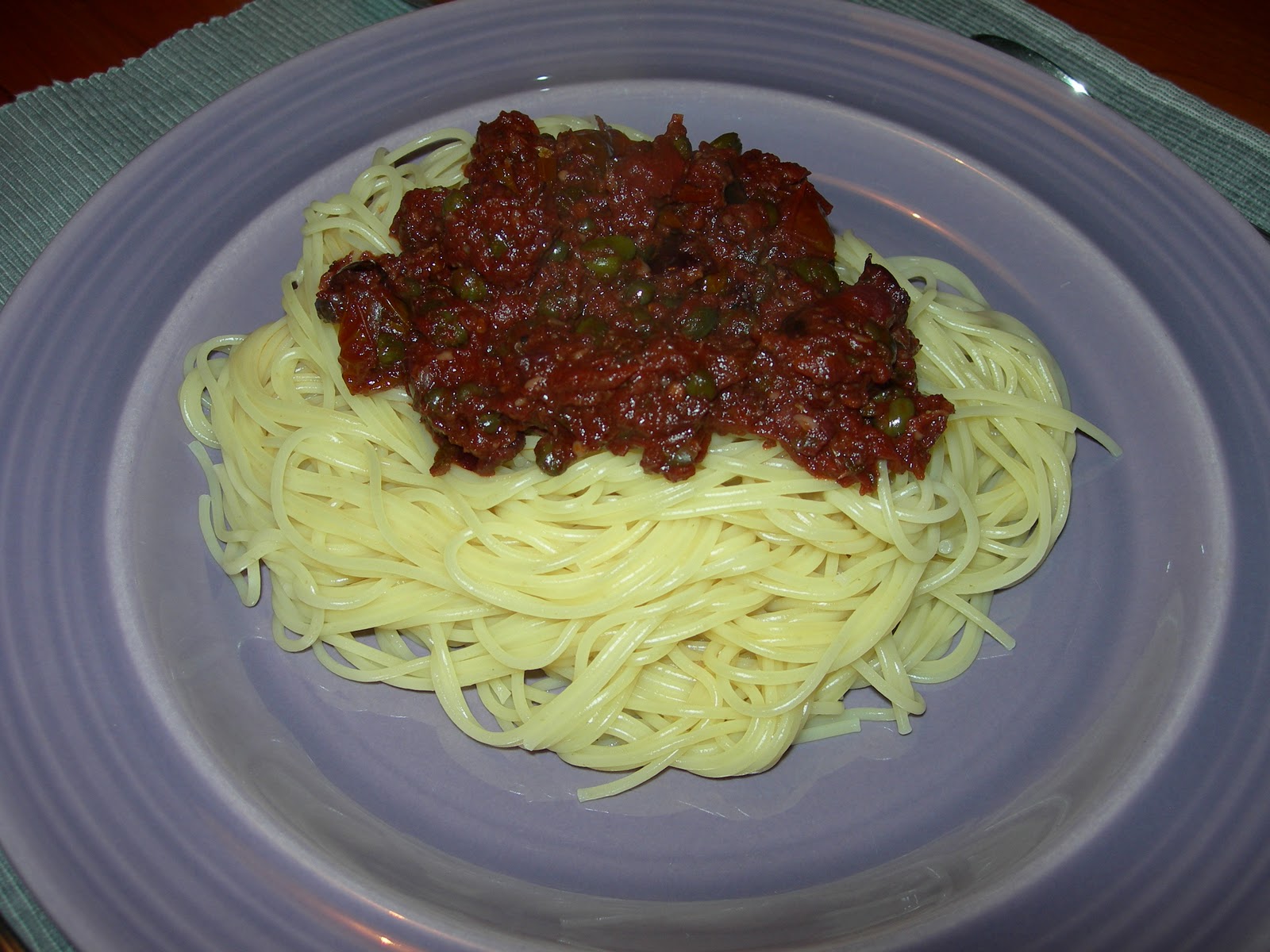
4. Taste and adjust the seasonings. Serve over thin spaghetti. Traditionally this dish is served without cheese, but who’s stopping you if you want it.

Note: You probably won’t need salt because of the saltiness of the anchovies, capers and olives. But taste to make sure.

6 servings
Adapted from Julee Rosso’s Great Good Food

Penne with a Slow-Cooked Sausage Sauce

When summer draws to a close and there is just the first hint of autumn in the air, I get hungry for pasta, especially the ones calling for a lot of fresh tomatoes. With a really simple salad, it is the perfect dinner.


2 tablespoons olive oil
8 fresh uncooked sweet Italian sausages, meat removed from skins and crumbled
Note: I use Caggiano Sweet Italian sausage from Sonoma Market.
2 small red onions, peeled and chopped
2 garlic cloves, peeled and chopped
1 or 2 small dried hot chile pepper, seeds removed if you desire
2 bay leaves
1 cup dry red wine (preferably Chianti or Sangiovese)
1 28-ounce can peeled plum tomatoes
OR
2 pounds fresh tomatoes, peeled, seeded, and coarsely chopped, see instructions if you need them
½ teaspoon ground nutmeg (or grate your own)
Salt and pepper to taste
¾ cup heavy cream
1 heaping cup freshly grated Parmesan cheese and more for the table
11 ounces penne rigate

1. Heat the oil in a large pan and sauté the sausage meat, stirring and breaking up the pieces. When the meat is cooked, add the onions, garlic, chiles, and bay leaves. Cook gently for 20 minutes or until the onions are soft and translucent.
2. Pour in the wine, increase the heat and cook until the wine evaporates.
3. Add the tomatoes, lower the heat and simmer gently until the sauce is thick, an hour or more depending on the juiciness of your tomatoes.
4. Season with nutmeg, salt and pepper. Add the cream and keep warm over a very low heat.
5. Cook the penne until al dente. Drain well. Place it in a warm bowl and add the sauce and cheese. Stir together and serve with additional cheese.

4-6 servings
Adapted from Rose Gray and Ruth Rogers’ Rogers Gray Italian Country Cook Book

A great accompaniment:

Everyday Green Salad with Everyday Salad Dressing

Wednesday, March 30, 2011

Tomato Cheese Tart


Pie crust for a low-sided 12-inch pizza pan, partially baked and cooled, see recipe below
12 ounces Swiss, Emmenthaler or Gruyere cheese (or other melting cheeses), cut in thin slices
2 or 3 large fresh tomatoes, cut into ½-inch slices
OR
7 medium Oven-Roasted Tomatoes (14 halves)
Salt and pepper
1 teaspoon dried basil
OR
3 tablespoons finely cut fresh basil, see instructions below
¼ cup grated Parmesan cheese
Coarse salt for garnish

1. Sprinkle the fresh tomato slices generously with salt and place them on a cake rack to drain for about 30 minutes. Pat them dry with paper towels.
OR
Drain the roasted tomatoes if they have been sitting in their accumulated liquid.
2. Preheat the oven to 375ºF.
3. Arrange the cheese slices, slightly overlapping, in the bottom of the cooled crust and place the drained or roasted tomatoes side by side on top. Sprinkle with a few grindings of black pepper, the dried or 1 tablespoon fresh basil and the grated Parmesan cheese.
4. Bake in the lower third of the oven for 25 minutes, or until the cheese has melted and the top of the tart is lightly browned. If the top isn’t quite brown enough, you can put the tart under the broiler for a minute or two, watching it carefully.
5. Sprinkle with a bit of coarse salt and the remaining 2 tablespoons of basil chiffonade just before serving. Serve hot or warm.

4-5 servings
Adapted from the Time Life Series Food of the World M.F.K. Fisher's The Cooking of Provincial France

How to Shred Basil (Chiffonade)

1. Stack the basil leaves on top of one another.


2. Roll them tightly lengthwise.


3. Cut the roll crosswise into tiny shreds.
 4. The end result should be a pleasing tangle of basil-y goodness.


  Pie Crust


For a 12-inch pizza pan with low sides:
2 cups flour
1 teaspoon salt
½ cup plus 3 tablespoons (1 stick plus 3 tablespoons) cold unsalted butter, cut roughly into ½-inch pieces
7 tablespoons ice water or more if necessary

1. Combine the flour and salt in the container of a food processor. Add the butter and pulse until the butter and flour are blended and the mixture looks like cornmeal, about 10 seconds.
2. Add the ice water to the mixture. Pulse until you see the mixture coming together. If it doesn’t after a couple of additional pulses, add more ice water, 1 tablespoon at a time, until it does.
3. Dump the contents of the container onto a sheet of plastic wrap and mold it into a ball. Flatten the ball into a disk; bring the plastic up around the dough to cover it completely. Either freeze for 10 minutes or refrigerate for 30 minutes. (You can also refrigerate the dough for a day or two or freeze it almost indefinitely.)
4. Sprinkle a smooth countertop or a large board with flour. Unwrap the dough and place it on the work surface; sprinkle the top with a little flour. If the dough is hard, let it rest a few minutes to warm up just a little.
5. Roll with light pressure, from the center out. Continue to roll, adding a small amount of flour as necessary, rotating the dough occasionally, and turning it over once or twice during the process. When the dough is about 1/8-inch thick, place your pan upside down over it to check the size. You want your circle of dough to be about 2-3 inches bigger than the pan it will go into.
6. If the size is correct, move the dough into the pan by folding the dough in half and placing the fold in the middle of the pan. Carefully unfold the dough and press it gently into the outer edge of the pan.
7. Trim the extra dough about 1 inch above the rim. Fold the dough above the rim in half (to ½ inch) and crimp with your fingers to make a decorative edge. With the scraps, you can fill in any part of the circle that’s missing.
8. Place the pan in the freezer for 10 minutes or the refrigerator for 30 minutes.

Partially Baked Pie Crust

1. Preheat the oven to 400ºF.
2. Prick the dough all over with a fork to help prevent the crust from poufing. (You’ll see what I mean when it happens.)
3. Tear off two pieces of aluminum foil. Press the sheets crossed over each other to conform to the dough, especially on the sides. Weight the foil with a pile of dried beans or rice, pie weights, the bottom of a 12-inch spring-form pan or a tight-fitting skillet or saucepan—anything that will sit flat on the surface and hold the dough in place. Sometimes I just do the foil and don’t weight it with anything and it’s just fine. The pouf goes down.
4. Bake for 12 minutes. Remove from the oven; remove the weights and foil. Prick the bottom, once again, with a fork.
5. Bake for another 4-5 minutes or so until the crust is just starting to turn a light brown and the bottom looks set.
6. Remove from the oven and cool on a rack.

Adapted from Mark Bittman’s How to Cook Everything: Simple Recipes for Great Food, Julia Child’s Mastering the Art of French Cooking and M.F.K. Fisher’s The Cooking of Provincial France.

Papaya Quesadillas with Spicy Tomato Relish


2 tablespoons olive oil
1 fresh jalapeno pepper, red or green, seeded and finely diced
1 large yellow onion, thinly sliced
1 ripe large papaya, seeded, peeled, and diced
Salt and black pepper to taste
5 ounces Asiago cheese or other mild white cheese, shredded
10 10-inch flour tortillas
4 tablespoons butter, softened (or bacon fat if you have some)
Sour cream, for serving
Spicy Tomato Relish, see recipe below

1. Make the Spicy Tomato Relish before you begin the quesadillas.
2. Heat the oil in a skillet (metal or pottery) over medium heat. Add the jalapeno and onion. Sauté 5 to 10 minutes until wilted and slightly golden brown. Stir in the papaya. Season with salt and pepper to taste. Sauté briefly to warm the papaya. Set the pan aside.
3. Butter one side of each tortilla (or use the bacon fat if you’d like). Lay buttered side down in a hot skillet. Cover with one-fifth of the onion/papaya mixture. Sprinkle with about ¼ cup shredded cheese. Top with the second tortilla, buttered side up.
4. When browned on the bottom, carefully turn the quesadilla over to brown the other side using as wide a spatula as you have. If any of the filling falls out in the process, tuck it back inside. Remove from the pan and keep warm in a 250ºF oven on a rimmed baking sheet.
5. Repeat with the remaining tortillas and filling, moving them to the oven as they are done.
6. When done, cut each of the quesadillas in half. Scissors work well. Serve warm with Spicy Tomato Relish and sour cream.

6 servings (if everyone eats about 1½ quesadilla halves)
You may have a little left over for lunch the next day. The cookbook suggests serving this as an appetizer, cutting the quesadillas into wedges, like a pie.
Adapted from The Junior League of Honolulu, Inc.’s Aloha Days Hula Nights

Spicy Tomato Relish


6 ripe tomatoes or 8 Roma tomatoes, seeded and chopped
OR
1 14-ounce can diced tomatoes
2 teaspoons minced fresh ginger root
4 garlic cloves, minced
1 teaspoon curry powder
1½ teaspoon cumin seed
¼ teaspoon fenugreek seed, optional
¼ teaspoon mustard seeds
1 small dried hot red chile
Salt to taste

1. Put the chopped or canned tomatoes, ginger, garlic and curry powder in a saucepan, stirring to mix.
2. In a small skillet over medium heat, toast the cumin, fenugreek, mustard seed and chile pepper until the mustard starts to pop, about 30 seconds to a minute. Add to the tomato mixture.
3. Cook the tomato sauce on medium heat for 20 to 25 minutes, stirring often, until thickened. Season with salt to taste.
4. Remove from the heat. Scrape into a bowl and let cool. Serve warm or at room temperature.

If you have any leftover, you can use as a filling for an omelet.

 Adapted from The Junior League of Honolulu, Inc.’s Aloha Days Hula Nights

Tuesday, March 29, 2011

New Wave Salad with Red Wine Basil Vinaigrette

I am always seeking out one-dish meals. And this one is absolutely perfect for the end-of-season gorgeous crops of basil, tomatoes and green beans.


1½ cups Red Wine Basil Vinaigrette, see recipe below
1 pound tender green beans, stringed and cut into thirds
1 tablespoon olive oil
10-12 ounces dried fettuccine or linguine, broken in half
1 cup fresh basil leaves
6 ripe tomatoes, seeded, cut into 1-inch chunks
1 cup pitted Kalamata olives
2 tablespoons chopped fresh parsley
4 ounces Parmesan cheese, in one piece

1. Prepare the Red Wine Basil Vinaigrette.
2. Bring a large pot of salted water to a boil. Add the beans and simmer until just tender, about 5 minutes. Scoop out of the pot, leaving the boiling water. Drain, rinse under cold water, drain again, and set aside.
3. In the same boiling water, add the oil and fettuccine and cook at a rolling boil until just tender. Drain, rise under cold water, and drain again. Turn out onto a clean dry dishtowel and pat dry. Place in a large serving bowl. Add ½ cup of the vinaigrette and toss well. Set aside.
4. Arrange the basil leaves in small stacks and roll them lengthwise. Slice the stacks diagonally into slivers. Or see instructions.
5. Cover the pasta with the green beans and tomatoes, followed by the black olives and slivered basil. Sprinkle with parsley and pour the remaining 1 cup vinaigrette over the salad. Toss gently.
6. Scrape the Parmesan with a vegetable peeler to make thin wide shavings. Place them on top of the salad. When serving, try to distribute a good mix of the ingredients on each plate. You may want to put the Parmesan and the peeler on the table so that you can serve yourself more if you’d like.

4 servings as a one-dish meal
Adapted from Julee Rosso and Sheila Lukins’ The New Basics

Red Wine Basil Vinaigrette

2 cloves garlic, pressed
1 tablespoon Dijon mustard
1/3 cup red wine vinegar
1 teaspoon salt
1 teaspoon black pepper
½ teaspoon sugar
1 cup olive oil
½ cup slivered fresh basil leaves, see instructions
½ cup chopped fresh parsley

1. Combine the garlic, mustard, vinegar, salt, pepper and sugar in a small bowl and whisk well.
2. Add the oil in a slow stream, whisking constantly until the vinaigrette has thickened slightly. Fold in the basil and parsley. Taste for seasonings and adjust as you see fit.

Makes 1½ cups
Adapted from Julee Rosso and Sheila Lukins’ The New Basics

Monday, March 28, 2011

Moroccan Two Reds Salad

This salad has an astonishingly psychedelic color and an unexpectedly great flavor. Almost makes you want to say "Cool, man."


1 pound beets (3 medium), cooked, see instructions below
1 pound (4 medium) tomatoes, seeded, cut into ½-inch cubes, see instructions if you need them
½ medium red onion, finely chopped
1 clove garlic, minced
¼ cup chopped flat-leafed parsley
¼ cup chopped fresh cilantro, mint, or oregano or a mix
2 tablespoon olive oil
2 tablespoons red wine vinegar
3 tablespoons fresh lemon juice
1 teaspoon salt or to taste
Freshly ground black pepper to taste

1. Cut the cooked beets into ½-inch cubes and place in a medium-sized bowl along with the tomatoes, onion, garlic, parsley, cilantro or other herbs.
2. Add the olive oil, vinegar, lemon juice, salt and pepper to taste and mix well.
3. Serve at once or chill in the fridge for up to an hour. I prefer the salad at room temperature.

6-8 servings
Adapted from Jeffrey Alford and Naomi Duguid’s Flatbreads and Flavors

How to cook beets

1. Cut off the greens, if your beets come with them, leaving about 1 inch of stem. Leave the tails in place. You can find a good use for the greens or, at the very least, compost them. Rinse the beets to get rid of any dirt.

2. Place the beets in a glass or metal 8x8 pan or something comparable. Pour about ½-inch water into the bottom of the dish and cover the dish tightly with aluminum foil.
3. Place in a 400ºF oven and roast until the beets are soft, about 1 hour. To check if they are done, carefully pull off the foil. Watch out for the steam escaping as it is very hot. Insert a knife into the largest beet. If it cuts into the beet without resistance, the beets are done. If it doesn't, re-wrap with the foil and continue to cook.
4. Let them cool slightly and then peel. The skins and stems should slip off easily, leaving your hands nicely pink. Cut off the beet tails.

Tabbouleh Cracked Wheat Salad

Elias Abusaba, our dear friend and a remarkable poet, would make us his version of Lebanese tabbouleh every time he and Mary Edith came to dinner. Nothing could compare to his. After he died, I was on my own and have tried my best to duplicate his wonderful salad, although I must confess (please forgive me, Elias) I don’t chop the parsley, green onions, and mint by hand. In memory of Elias…


½ cup bulgur (cracked wheat)
Juice of 1-2 lemons equaling about 6 tablespoons
3 Romas or other tomatoes, seeded, juiced, and chopped (you want about 2 cups chopped), see instructions if you need them
Note: Romas are pretty good during the winter—but are certainly not local. You can also use sun-dried tomatoes in olive oil, thinly sliced.
2 cups chopped parsley (1½-2 bunches) using a food processor
½ cup chopped green onions (4-5 green onions) using a food processor
½ cup chopped mint, using a food processor
1 tablespoon dried mint
½ cucumber, peeled, seeded and diced, see instructions if you need them
Pinch of allspice, optional
Pinch of cinnamon, optional
½ teaspoon cumin, optional
Salt and pepper to taste
1/3 cup olive oil
Lettuce for serving

1. Soak the bulgur in 2 cups water for 20 minutes. Squeeze well with your hands, removing as much moisture as you can.
2. Put in a bowl and add the lemon juice and tomatoes. Let sit for 30-45 minutes to absorb the liquid or until the grain is tender.
3. Add the parsley, green onions, fresh and dried mint, cucumber, spices, if desired, salt, pepper and oil. Mix well.
4. Just before serving, taste for seasonings. Adjust as needed. You can serve the salad on a bed of greens or use the leaves to scoop it up.

6 servings
A combination of two recipes: Cassie Maroun-Paladin’s Foods of the Lebanon and Claudia Roden’s The New Book of Middle Eastern Food

Ensalada criolla (Creole Salad) with Cuban Vinaigrette


2 medium tomatoes, seeded and diced
1 large avocado, peeled and pitted, cut into chunks
½ medium red onion, sliced thinly
6 tablespoons Vinagreta Cubana, see recipe below
Salt to taste

1. Right before serving, place the tomatoes, avocado, and onions in a mixing bowl.
2. Add the vinaigrette and mix to combine. Season with salt to taste.

4 servings
Adapted from Alex Garcia’s In a Cuban Kitchen

Vinagreta Cubana (Cuban Vinaigrette)

1 teaspoon Dijon mustard
1 small garlic clove, pressed
3 tablespoons fresh lime juice or white vinegar
1/3 cup olive oil
2-3 tablespoons chopped fresh parsley
2-3 tablespoons chopped fresh cilantro
Salt and black pepper to taste

1. Combine the mustard, garlic, and lime juice in a small mixing bowl. Whisk in the olive oil in a steady stream.
2. Add the parsley, cilantro, salt and pepper and mix thoroughly.

Makes ¾ cup
Adapted from Alex Garcia’s In a Cuban Kitchen

Braised Carrots


2 tablespoons olive oil
1 pound carrots, peeled and cut into 3½ x ½ x ½-inch sticks
6 cloves garlic, peeled and sliced
2 medium tomatoes, seeded and chopped
¼ cup chopped fresh mint
3 slices lemon, seeds removed, plus juice from the rest of the lemon
1 tablespoon sugar
1 teaspoon salt
½ teaspoon anise seeds
½ teaspoon ground cumin
Pepper
2 tablespoons chopped fresh parsley

1. Put the oil and the carrots into a heavy 10-inch skillet. Cook on high heat, stirring and shaking the pan often and scraping the browned bits occasionally with a wooden spoon, until the carrots have lightly browned, about 10 minutes.
2. Add the garlic, tomatoes, mint, lemon slices, sugar, salt, anise and cumin; mix well.
3. Cook until bubbling vigorously; reduce heat to low. Cover and cook for 10 minutes. Stir, turning the carrots. Cover and cook until the carrots are very soft, 10 minutes or so more. Add lemon juice and season with pepper. Remove the lemon slices.
4. Before serving, sprinkle with parsley. Serve hot or at room temperature.

If you make this ahead, you can reheat for 1-2 minutes in the microwave.

4 servings
Adapted from Eating Well, February/March 2006