Showing posts with label gluten-free. Show all posts

Monday, April 4, 2011

Apricot Thrones


25 pecan halves
2 ounces cream cheese at room temperature
2 ounces blue cheese
25 dried apricots

1. Preheat the oven or toaster oven to 325ºF. Place the pecans on a baking sheet and toast in the oven until golden brown. Watch carefully. Let them cool.
2. Combine the cheeses and stir until evenly mixed. If the mixture doesn’t get smooth, microwave for 10 seconds to soften slightly and stir again.
3. Scoop up small amount of the cheese mixture and place on top of each apricot. Start with a small amount. You can always add more later.
Note: You can use a pastry bag if you are doing a large number of these.
4. Top with a toasted pecan, rounded side up, if you are fussy about it. Transfer the apricots to a serving plate, cover with plastic wrap, and refrigerate.
Note: The recipe can be completed to this point up to 8 hours before serving.
5. Serve at room temperature.

6-10 servings
Adapted from Hugh Carpenter and Teri Sandison’s Fast Appetizers

Carrot Purée with Caraway and Feta


1¾ pound carrots, peeled
4 tablespoons olive oil, plus extra for drizzling
Salt and pepper
1 tablespoon caraway seeds, roughly ground in a mortar, optional
Note: I haven’t used these because the carrots by themselves are so good. Of course, this presumes really tasty carrots.
¼-½ cup feta cheese, crumbled, for garnish
2 tablespoons chiffonade of mint, for garnish, see instructions for basil
5 rounds of pita bread or squares of lahvash

1. Slice the carrots into ¾-inch rounds, toss with half the olive oil and some salt and pepper, and place on a rimmed baking sheet. Cover with foil and roast at 400ºF for about 30 minutes or until they are completely tender. Remove the foil and cook uncovered for about 15 minutes or until they are golden.
2. Cool a little before puréeing in a food processor or mashing by hand. Transfer to a bowl, stir in the optional caraway, the remaining olive oil, and salt and pepper to taste. If the purée is too thick to spread, thin it out with a little water.
3. To serve, put the purée in a shallow bowl, crumble the feta on top, drizzle with a little olive oil, and sprinkle with the mint.
4. Serve with toasted pita bread which you make by cutting each circle into 8 pieces (or the lahvash cut in 3-inch squares), arranging them on a baking sheet and toasting under the broil for 2-3 minutes. Watch carefully. They burn in a flash, especially if guests arrive as they are toasting. For your gluten-free guests, you can have rice or lentil crackers on hand or vegetables for dipping.

6-8 servings as an appetizer
Adapted from Sam and Sam Clark’s Casa Moro

Curried Carrot Dip


1 pound carrots, peeled and cut into ½ -inch pieces
¼ cup sunflower seeds, lightly toasted
2 teaspoons olive oil
½ teaspoon minced garlic
1 teaspoon curry powder
½ teaspoon ground cumin
¼ teaspoon salt or to taste
1 tablespoon fresh lemon juice

1. Place the carrots in a pot of salted water and bring it to a boil. Cook for 7 to 10 minutes or until soft. Drain and let cool.
2. Place the sunflower seeds in a blender or food processor and process into crumbs. Add the carrots and all the remaining ingredients and blend until smooth, scraping down the sides of the processor as needed.
3. Taste for salt and adjust the spices and lemon juice. Transfer to a covered container and refrigerate until ready to use.

Serve with crackers, toasted naan (Indian bread) or fresh veggies.

Makes 2 cups
Adapted from Isa Chandra Moskowitz and Terry Hope Romero’s Veganomicon: The Ultimate Vegan Cookbook

Cauliflower, Caper and Pumpkin Seed Spread


8 ounces cauliflower, broken or cut into florets
¼ cup shelled raw pumpkin seeds
1 clove of garlic, coarsely chopped
2 green onions
¼ cup olive oil
1 tablespoon capers in brine + a little of the brine for seasoning
Salt and pepper to taste

1. Bring two cups of water to a boil in a small saucepan. Add the cauliflower and cook until tender, about 5 minutes. Scoop out the cauliflower. Leave the water boiling. Rinse the cauliflower in cold water to stop it cooking. Drain and set aside to cool.
2. Dunk one of the green onions into the boiling water for 15 seconds. Remove, drain and coarsely chop along with the uncooked green onion.
3. In a food processor purée the pumpkin seeds until they become a fine meal. Add the garlic and whirl until it mixes well with the pumpkin seeds.
4. Add the green onions and drained cauliflower to the food processor. Process while slowly adding the olive oil, capers, brine, salt, and pepper. When the mixture is thick and well combined, it’s ready.

Serve with rice crackers, rye toast, toasted pita, herb slab, ciabatta or cucumber slices.

6 servings as a dip before dinner
Adapted from Marlena Spieler’s column in the San Francisco Chronicle

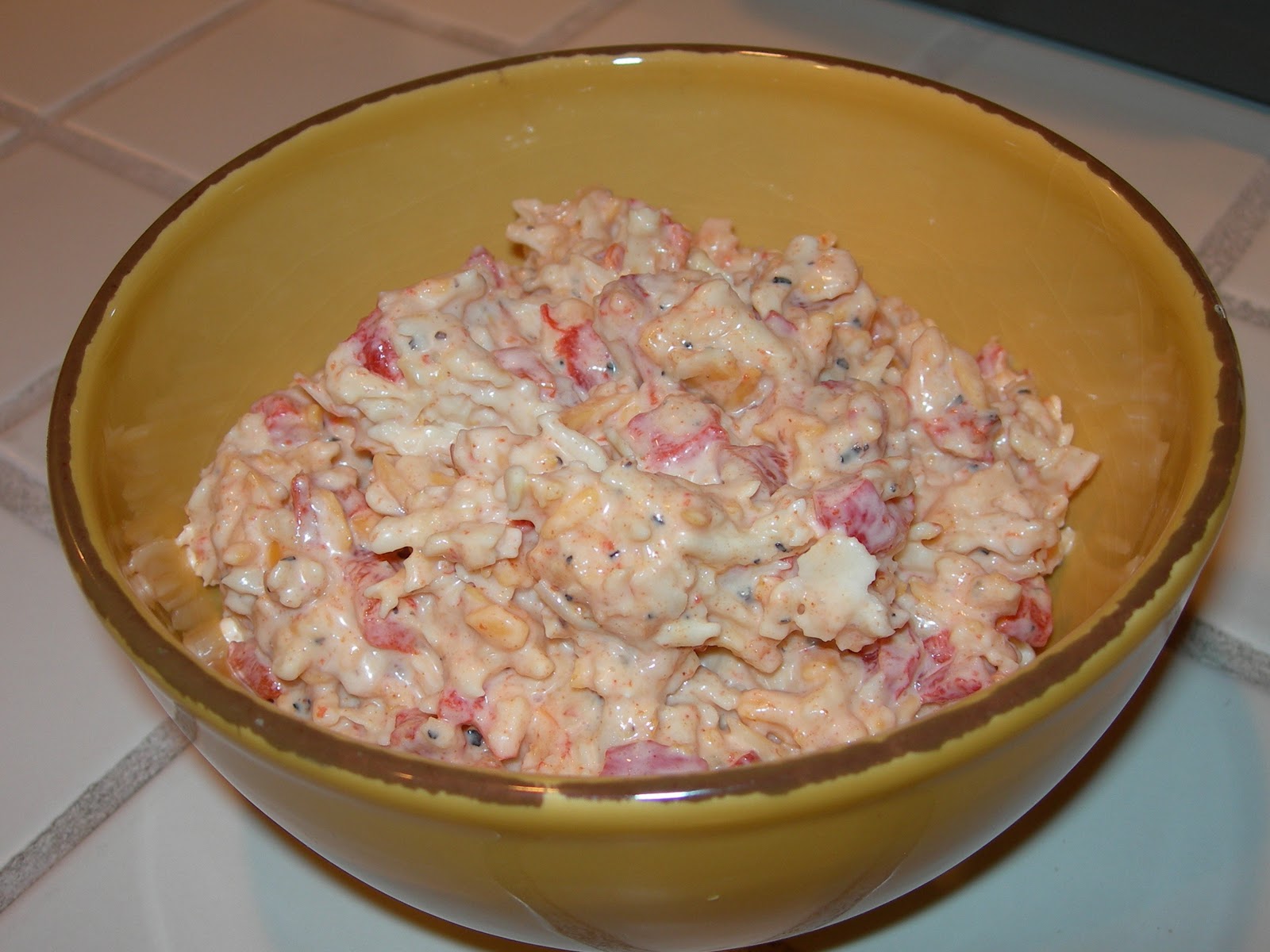
Foster’s Pimiento Cheese Spread

Katherine’s mother who lives in Roanoke, Virginia always has a deli tub of this spread awaiting us in the fridge. The one she buys at her favorite place is really good. This one is even better.


1 cup (4 ounces) grated sharp Cheddar cheese
Note: You can grate the cheeses in a food processor if you wish.
1½ cups (6 ounces) grated Parmesan cheese
1 cup (4 ounces) grated smoked or regular Gouda cheese
2 roasted red bell peppers, peeled, cored, seeded, and chopped, see instructions below
1 cup mayonnaise
1 jalapeno, red is preferable but green is OK too, seeded and minced
1 tablespoon cider vinegar
1 tablespoon honey
½ teaspoon smoky sweet or regular paprika
1 teaspoon salt
1 teaspoon pepper

1. Mix together the cheeses and the roasted peppers in a large bowl.
2. Combine the mayonnaise, jalapeno, vinegar, honey, paprika, salt and pepper in a small bowl and stir to blend well.
3. Stir the mayonnaise mixture into the cheese mixture and mix well. Taste for salt, adding more if necessary. Refrigerate in an airtight container until ready to use or up to 1 week.

There are lots of uses: on crackers, toasted bread, biscuits, English muffins, or chips; as a sandwich spread, a topping for baked potatoes, or an omelet filling. Great for breakfast, lunch, or a pre-dinner snack.

Makes about 4 cups
Adapted from Sara Foster’s The Foster’s Market Cookbook

How to roast red bell peppers and poblanos

1. Place the peppers on a shallow rimmed pan lined with aluminum foil. If you don't line it with foil, you'll have a nasty clean-up job afterwards. (See below)

2. Place the pan under the broiler on the second shelf down from the top of the oven. Keep turning the peppers until they are blackened on all sides. Remove from the oven.

3. Place them in a bowl and cover. Sometimes I skip this step and peel them while they are still hot, when the skin is still slightly puffed up away from the flesh.

4. When they are cool enough to handle, remove all the blackened skin.

5.  Pull the skinned pepper apart and remove the stem, seeds, and white membranes.  Refrain, if you can, from rinsing under water. I save the liquid the peppers release to use in any situation calling for stock.

Dates Stuffed with Almonds


24 blanched whole almonds, toasted or untoasted
24 medium dates, pitted
12 thin slices bacon, cut in halves

1. Preheat the oven to 350ºF.
2. Stuff an almond inside each date. Wrap each date with bacon and secure with a toothpick crosswise.
3. Bake in the 350ºF oven on a baking sheet for 20-30 minutes or until the bacon is crisp.
If the bacon isn’t browned enough for you, place the dates under a hot broiler for a minute or two, watching them closely.
Note: Can make the day ahead and bake for 20 minutes. Reheat at 350ºF before serving.

8 servings (about 3 per person)
Adapted from Marimar Torres’ The Catalan Country Kitchen

North African Hummus with Za'tar Spiced Pita

This is the best hummus in the world. I swear.


1 14 or 15-ounce can chickpeas, drained and rinsed
1/3 cup tahini paste, well stirred
¼ cup lemon juice (about 1 lemon)
2 teaspoon North African Spice Mix, see recipe below
2 garlic cloves, peeled and coarsely chopped
3 tablespoons extra virgin olive oil
Salt and pepper to taste
Olive oil and sumac, optional

1. Place the chickpeas, tahini, lemon juice, North African Spice Mix, garlic, and olive oil in a food processor and purée until smooth. You may need to add a bit of water to make it a good spreading consistency.
2. Season to taste with salt and pepper. Can make ahead and chill. Return to room temperature for eating.
3. Place in a low bowl. Make a shallow indentation in the middle of the hummus. Pour in a bit of olive oil and sprinkle with sumac. Serve with Za’tar Spiced Pita, see recipe below.

6-8 servings as a dip before dinner

North African Spice Mix
This spice mix is a pain to make. But once it is done you have the fixings for multiple hummus mixtures in almost no time flat.

1 tablespoon cumin seeds, toasted and ground*
1 tablespoon coriander seeds, toasted and ground*
2 teaspoons ground cinnamon
1½ teaspoons ground fenugreek, toast and grind if you’re using chunky fenugreek
Note: You can leave it out if you can’t find it.
1 teaspoon ground ginger
½ teaspoon smoky sweet paprika or regular paprika
½ teaspoon smoky hot paprika or a pinch of cayenne

1. In a small bowl, combine all the ingredients and mix well.
2. Store in a glass jar (like an old spice jar), tightly covered. Label the jar with the contents or you’ll forget what it is. Or I should say, I would forget what it was.

*Note: You can use the previously ground kind as well.

Adapted from Andy Husbands’ and Joe Yonan’s The Fearless Chef

Za’tar Spiced Pita


1 tablespoon za’tar
Note: This is available at most Middle Eastern or Persian food stores. Go to Zand’s on Solano in Albany, CA if you are in the Bay Area.
1 tablespoon olive oil
OR all of the spices listed below plus the oil
1 tablespoon sumac or lemon zest
1 tablespoon white sesame seeds
2 teaspoons cumin seeds, toasted and ground
1 teaspoon dried thyme
1 teaspoon dried marjoram or oregano
1 teaspoon salt
1 tablespoon olive oil

4 rounds of pita bread

1. Turn oven on broil with a rack set 4 to 6 inches from the top element.
2. Combine the purchased za’tar with the olive oil.
OR
Make your own za’tar: in a small bowl, combine the sesame seeds, sumac, cumin, thyme, marjoram or oregano, and salt.
3. Measure out 1 tablespoon. Add the olive oil and blend well. Place the remaining za’tar in a glass spice jar and mark the contents for the next time.
4. Cut each round into 6-8 pieces. Arrange the pitas on a baking sheet and spread the za’tar and oil mixture evenly over each. You may not need all of your homemade za’tar mixture.
5. Broil until deep golden brown, 2 to 4 minutes, watching carefully and rotating the pan half way through to brown evenly. It can turn from toasted to burnt in an instant.
6. Serve with the hummus.

Adapted from Andy Husbands' and Joe Yonan’s The Fearless Chef

Mushroom Pâté


½ ounce dried porcini mushrooms
1 cup boiling water
¼ cup butter (½ stick)
1 pound fresh cremini mushrooms, thinly sliced, tough stems discarded
1 garlic clove, coarsely chopped
2 tablespoons oyster sauce
½ teaspoon hot sauce
½ teaspoon sugar
6 ounces cream cheese
Salt and pepper
¼ cup chopped fresh chives, parsley or cilantro or a mixture
Edible flowers, like society garlic flowers, optional
Crackers, thinly sliced French bread, or crostini

1. Place the dried mushrooms in a small bowl and cover with 1 cup boiling water. Let sit for 30 minutes. Remove the mushrooms from the soaking liquid. Pour the liquid through a coffee filter or a double layer of paper towels in a sieve (to catch the dirt from the dried mushrooms). Reserve both the mushrooms and the water.
2. Heat a 12-inch sauté pan over high heat. Add the butter and when it begins to brown, add the softened dried mushrooms, the fresh mushrooms, and garlic. Sauté until the mushrooms begin to wilt and squeak, about 5 minutes.
3. Add the reserved mushroom water, oyster sauce, hot sauce, and sugar. Cook over high heat until all the moisture disappears. Remove from the heat and let cool to room temperature.
4. Transfer the mixture to a food processor and process until smooth. Cut the cream cheese into bits and add it to the mushroom mixture along with 2-3 tablespoons of the herbs. Process until very smooth, adding salt and pepper to taste.
5. Line the bottom of a 6½ or 7-inch springform pan with parchment paper and butter the sides.
6. Transfer the pâté to the prepared pan, and press a layer of plastic wrap over the surface. Refrigerate.
Note: You can also put the pâté in a pretty bowl.
7. To serve, run a knife around the edge of the pan, remove the sides and bottom of the springform pan. Peel off the parchment paper by flipping the pâté on to your hand, paper side up. Then flip the pâté right side up onto a flat serving plate. Decorate with the reserved herbs and the flowers. Serve chilled or at room temperature with crackers, baguette slices, or crostini and, for the gluten free, rice or lentil crackers.

Serves 6-12
Adapted from Hugh Carpenter and Teri Sandison’s Fast Appetizers

Fig and Black Olive Tapenade


1 cup stemmed and quartered (about 6 ounces) dried Black Mission figs
1½ cups water
2 cups (1/2 pound) pitted Kalamata or Nicoise olives
Juice of 1 lemon
1½ tablespoons whole grain or smooth Dijon mustard
2 garlic cloves, chopped
1 tablespoon drained capers
2 teaspoons chopped fresh rosemary
2 tablespoons olive oil or more if necessary
Salt and pepper

1. In a heavy medium saucepan, combine the figs and water. Set over medium heat and bring to a simmer. Partially cover and cook, stirring once or twice, until the figs are very tender, about 30 minutes. Cool slightly, drain, reserving 2 tablespoons of the fig cooking liquid.
2. Look the olives over to see if any still has its pit. Remove and proceed. In a food processor, combine the figs, olives, lemon juice, mustard, garlic, capers, rosemary, and reserved 2 tablespoons of fig-cooking liquid. Pulse to create a thick paste. With the motor running, gradually add the oil. Season generously with pepper and add salt to taste, remembering the various salty ingredients.
Note: There is occasionally a pit in the pitted olives. Without having to check each olive before chucking it into the processor, pulse a couple of times at the beginning. You will hear the rattle of the pit. Stop immediately and retrieve it. Pulse another couple of times to make certain you have them all. Then full speed ahead.
3. Transfer to a storage container, cover, and refrigerate at least 24 hours to develop the flavors. But less time in the fridge is OK too.
4. Bring the tapenade to room temperature before serving. Serve with French bread, crackers, or pita chips or, for the gluten-free, rice or lentil crackers or vegetables.

Makes about 2½-3 cups; serves 8-10 as a dip before dinner
Adapted from Carrie Brown’s The Jimtown Store Cookbook

Green Olive Tapenade


2 cups pitted green olives
½ cup slivered almonds
1 garlic clove, coarsely chopped
2 tablespoons cilantro
2 tablespoons parsley
1 teaspoon lemon zest, using a microplane
1 tablespoon fresh lemon juice
1/3 cup olive oil, or less
Salt and pepper to taste

1. Look the olives over to see if any still has its pit. Remove and proceed. Combine olives, almonds, garlic, cilantro, parsley, and lemon zest in a food processor.
2. Pulse to combine. Add the olive oil with motor running. Process until the mixture is smooth.
3. Add lemon juice and mix. Add some pepper. Taste for salt but probably you won’t need much.
4. Serve with bread, corn chips, crackers or sliced cucumbers. Rice or lentil crackers will make your gluten-free guests very happy.

Makes about 1½ cups; serves 4-6 as a dip before dinner
Adapted from The Cakebread Cellers Napa Valley Cookbook

Jane's Bacon and Lentil Soup


¾ cup small red lentils
1 bay leaf
4 cups stock or water
10-12 slices thick smoked bacon (10-12 ounces uncooked), cut crosswise into ½-inch pieces
1 small onion, finely diced
1 small carrot, peeled and finely diced
You can add some fennel and some red and yellow pepper, chopped, if you have them on hand
1 garlic clove, minced or pressed
1 can (14 ounces) diced tomatoes
OR
1 large beefsteak tomato or comparable smaller ones, peeled, cored, seeded, saving the juice and adding it to the soup. See instructions below.
½ teaspoon dried oregano
½ teaspoon cumin
2 tablespoons coarsely chopped fresh mint, plus more for garnish
Salt and pepper to taste
1 green onion, both white and green parts, thinly sliced
Sour cream or crème fraiche, optional

1. In a medium saucepan, stir together the lentils, bay leaf, and stock or water. Bring to a boil, reduce the heat and simmer until the lentils are soft, about 20 minutes. They will change from an orange color to a muddy yellow—do not be alarmed.
2. In a soup pot, cook the bacon pieces over low to medium heat, turn as needed to brown but not crisp. Remove from the pan, leaving the bacon fat. If there is a large amount of bacon fat, you might want to pour some of it into a container to save for another use. Leave 1-2 tablespoons in the pot.
3. Add the onions to the soup pot and sauté over medium heat until tender and starting to brown, about 8-10 minutes.
4. Add the tomatoes, the cooked lentil mixture, ¾ of the bacon (save some for a garnish), the oregano, cumin, and mint and stir until mixed. Season with salt and pepper to taste. Simmer for 10 minutes. Remove the bay leaf. Adjust seasonings to suit you.
5. Ladle into bowls. Garnish each serving with the sliced green onion, bacon and sour cream, if desired.

4-5 servings
Adapted from Sara Perry’s Everything Tastes Better with Bacon

Lemon Cornbread 
This cornbread is delicious with the soup.


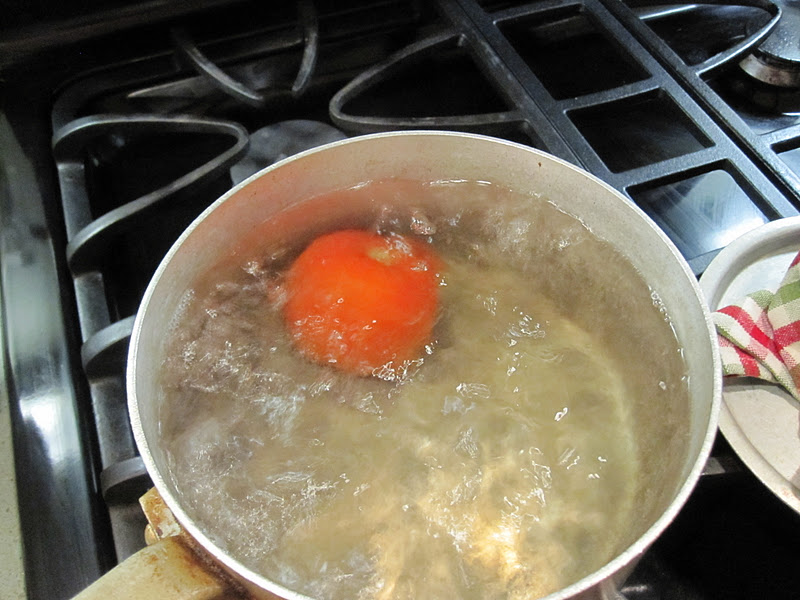
How to peel and seed tomatoes

Some recipes will call for peeling alone, leaving the seeds. Some will call for seeding alone, leaving the skin in tact. Here are instructions for the whole process which you can modify as you see fit.

1. To peel the skin, drop the tomato into boiling water for 10-15 seconds depending on how ripe it is. Remove it from the water.
2. Slit the skin and peel it off. Remove the core (where the stem was growing).
3. To seed the tomato, slice in half around the equator. Place a small sieve over a bowl or pitcher.
4.With your finger, remove as many of the seeds as you can into the sieve, allowing the liquid which comes out with them to drain into the bowl. It is, to my mind, precious tomato juice.

Thai Chicken Coconut Soup

If you are new to Thai food, I suggest that you start with the soup. It makes a gorgeous simple dinner with the addition of a salad. And it takes no time at all to fix. I made it for my daughter-in-law when she was healing from surgery. I think that it hastened her recovery.

1 14-ounce can coconut milk
1 14-ounce can chicken broth
6 quarter-sized slices fresh ginger
1 stalk lemongrass, cut in 1-inch pieces
1 pound boneless, skinless chicken breast or thighs, sliced thinly
7 ounces tofu, sliced, optional
1-3 cups sliced mushrooms
2 tablespoons fresh lime juice
1 tablespoon Thai or Vietnamese fish sauce
1 teaspoon salt or to taste
1 teaspoon sugar
2 teaspoons Thai chili paste
2 tablespoons chopped fresh basil
2 tablespoons chopper fresh cilantro

1. In a medium saucepan, mix together the coconut milk, broth, ginger and lemongrass. Bring to a boil over high heat.
2. Add the chicken, optional tofu, mushrooms, lime juice, and fish sauce, salt, sugar and chili paste. Reduce heat and simmer until the chicken is cooked. Check for salt, adding if necessary. Remove the lemongrass pieces as best you can.
3. Pour into bowls and garnish with basil and cilantro.

You can make a vegetarian version by substituting 7-14 ounces of tofu for the chicken, vegetable broth for the chicken broth, and soy sauce for the fish sauce.

4 servings
Adapted from Jiranooch Shapiro’s version in Sunset Magazine, December 2008 

Red Pepper Soup with Olives, Lemon Zest, and Yogurt

Great comfort food. Gorgeous colors.


4 red bell peppers or 5 red gypsy peppers, roasted and skinned, please see instructions if you need them
2 tablespoons olive oil
2 garlic cloves, peeled and sliced
1 small red onion, sliced
4 ripe tomatoes, peeled, seeded (catching the liquid), and chopped, see instructions if you need them
Note: I seed the tomatoes over a sieve placed over a bowl. The seeds drop into the sieve and the liquid falls into the bowl. Periodically I swish the seeds around to release more tomato liquid.
OR
1 14-ounce can diced tomatoes
½ cup thick yogurt
Note: If all you can find is soupy yogurt, line a sieve with two layers or paper towels, place the sieve over a bowl, and pour the yogurt into the sieve. Let it drain until the consistency is as thick as you like it. See photo and instructions.
½ teaspoon Aleppo pepper or smoked or regular paprika
1/3 cup pitted black olives, slivered in quarters
Finely grated zest of one lemon, see photos if you need them
1 tablespoon rosemary [the original recipe calls for this], very finely chopped, but I prefer finely chopped thyme.
A drizzle of olive oil

1. Heat the olive oil in a soup pot and sauté the garlic and onion for about 5 minutes. Add the tomatoes and cook until the mixture begins to bubble. Tear up the roasted peppers as you add them to the pan. Season with salt and pepper.
2. Add 3 cups water, or a combination of the tomato liquid (from seeding the tomatoes), the liquid released by the broiled peppers and enough water to make 3 cups. Bring to a boil, lower the heat, cover, and simmer gently for about 30 minutes.
3. Remove from the heat and purée in a food processor. Return the soup to the soup pot and add the Aleppo pepper. The soup should be fairly thick: if it seems too thin, simmer uncovered for a while longer; if it is too thick, add more liquid. You can let it sit at this point until you’re ready to serve it.
4. Before serving, reheat gently. Check the seasoning and serve the soup hot with a dollop of yogurt, a sprinkling of the olives, lemon zest, rosemary or thyme, and a drizzle of olive oil.

4 servings
Adapted from Tessa Kiros’s Falling Cloudberries: A World of Family Recipes

Curried Butternut Squash Soup


2 tablespoons butter
2 large carrots, peeled, sliced
1 cup chopped yellow onion
1 garlic clove, minced or pressed
1 tablespoon grated fresh ginger
2 teaspoons curry powder
¼ teaspoon cinnamon
1/8 teaspoon nutmeg
Pinch of cayenne or smoky hot paprika
1 or 2 butternut squash (2 pounds in all), peeled, seeded and cut into chunks
1 teaspoon salt
5 cups apple juice, preferably organic and unfiltered
1 cup heavy cream or combination of heavy cream and milk
¼ cup chopped cilantro
Salt and pepper to taste

1. Heat the butter in a soup pot over medium-high heat until melted. Add the carrots, onion and garlic; mix well. Sauté for 5 minutes or until the vegetables are tender.
2. Stir in the fresh ginger, curry powder, cinnamon, nutmeg, and cayenne. Cook for 1 minute.
3. Stir in the squash, salt, and apple juice. Bring to a boil. Reduce the heat and simmer, covered, for 30 minutes or until the squash is tender.
4. Process the soup in batches in a food processor or blender until smooth. Return the soup to the pot, adding additional apple juice if needed for desired consistency.
Note: You can fix this soup ahead up to this point. When you are ready to reheat, you may have to add a bit of water to loosen it up the.
5. Stir in the heavy cream. Cook until heated through, stirring occasionally. Do not let it boil. Add more salt or seasonings if necessary. Ladle into soup bowls. Drizzle with additional cream if desired. Sprinkle with cilantro.
If you want a bit more protein, fry up some bacon or pancetta, cut in ½-inch pieces. Add some to each bowl of soup.

8 servings
Adapted from The Toledo Museum of Art Aides’ Art Fare: A Commemorative Celebration of Art and Food

1991: A Cold Moroccan Tomato Soup

I am inclined to try any recipe that has Morocco in the title. This was no exception. The result was well worth the effort. But faulty instructions in the original made the task more arduous than necessary. (A food mill with a large disk is no help whatsoever in removing tomato seeds; they go right through. Plus my tomatoes were reluctant to join the seeds in the bowl. So I found another approach—the Cuisinart.) I have worked out the instructions, at least to my own satisfaction, and now I’m ready to pass this delicious soup along to you. It is best made with good tomatoes, if it can ever stop raining or get warmer or get cooler. Take your pick depending on where you are in the country.


5 medium clove garlic, smashed, peeled and minced
2½ teaspoons sweet paprika or sweet smoky paprika
1½ teaspoons ground cumin
Large pinch of cayenne
4 teaspoons olive oil
2¼ pounds tomatoes, skinned and cored, see instructions if you need them
¼ cup packed chopped cilantro leaves, plus more for garnish
1 tablespoons white wine vinegar
Zest of 1 lemon, see photos if you need them
2 tablespoons plus 2 teaspoons fresh lemon juice
2 teaspoons salt and more to taste
4 stalks celery, finely diced
2 tablespoons water, if needed

1. In a small saucepan, stir together the garlic, paprika, cumin, cayenne and olive oil. Place over medium-low heat and cook, stirring constantly, for 5 minutes or until the garlic is soft. Remove from the heat and set aside.
2. Place the skinned tomatoes, pulling them apart a bit with your hands, in a food processor and whirl until smooth. Drain through a large sieve into a good-sized bowl to remove as many of the seeds as possible. Stir the liquid in the sieve with a rubber spatula until it is as dry as possible and you’ve extracted as much of the tomato goodness as you can, leaving the seeds behind. Occasionally wipe the back of the sieve with your spatula to release more of the tomato goodness.
3. Stir in the cooked spice mixture, cilantro, vinegar, lemon zest and juice, salt, celery and water, if necessary. Add more salt as desired.
4. Refrigerate until cold. Serve garnished with cilantro leaves.

4-6 servings depending on the size of the bowls
Adapted from Amanda Hesser’s article in The New York Times Sunday Magazine, July 2009; Barbara Kafka wrote the original article for The Times in 1991

A Cold Yogurt and Cucumber Soup


1 cucumber, peeled, seeded, and diced (can also use the seedless kind), see instructions below
4 cups plain whole or low-fat yogurt
¼ cup chopped scallions
2 tablespoons chopped fresh mint
2 tablespoons chopped fresh dill
2 teaspoons chopped fresh oregano
1 teaspoon chopped fresh thyme
2 tablespoons chopped fresh tarragon
2 cloves garlic, pressed
1 cup water, more if your yogurt is very thick
salt and pepper to taste

Garnishes:
¼ cup walnuts, coarsely chopped
½ cup golden raisins, chopped if necessary
3 tablespoons dried rose petals, optional but so nice
Note: You can get these from a Middle Eastern store in your area. Zand’s on Solano in Albany, CA is good for Bay Area folks.
1 tablespoon chopped fresh mint
1 pita bread, cut into ½-inch squares and toasted, omit for your gluten-free guests

1. Combine the cucumber, yogurt, scallions, mint, dill, oregano, thyme, tarragon, garlic, salt and pepper in a large mixing bowl. Mix thoroughly with 1 cup water and adjust the seasonings to taste.
2. Refrigerate several hours or overnight.
3. Just before serving, add the walnuts and golden raisins. Pour into individual serving bowls and sprinkle with rose petals, fresh mint, and toasted pita squares.

6 servings as a first course
Adapted from Najmieh Batmanglij in The New York Times Food Section

How to peel and seed a cucumber

1. Cut off both ends of a cucumber and peel with a vegetable peeler.
2. Cut in half the long way.
3. With a spoon, scrape out the seeds.
4. You are now ready to proceed with slicing or chopping or whatever.

Barbeque Pulled Chicken

I made this as a lunch menu in April 2006 for a reunion of my Theta sisters from the University of Michigan. We gathered in Sonoma, California at a lovely retreat center and went on a wine tour, pictured here, one afternoon. It was great.

The black beans pictured on this plate aren't included in this menu.


1 8-ounce can tomato sauce or home-made if you have it
1 7-ounce can chopped green chiles, including the juice
3 tablespoons cider vinegar
2 tablespoons honey
1 tablespoon regular or smoky sweet paprika
Note: El Rey de Vera Pimenton de la Vera (Spanish Smoked Paprika) comes in Sweet, Bittersweet, and Hot. I use Sweet in this recipe. Fancy supermarkets often have it. I get mine at The Spanish Table in Berkeley.
1 tablespoon tomato paste
1 tablespoon Worcestershire sauce
2 teaspoons dry mustard
1 teaspoon ground chipotle chile
Note: Chipotle ground chile is in my supermarket in the Mexican section, usually in a clear cellophane bag.
½ teaspoon salt or to taste
2½ pounds boneless, skinless chicken thighs, extra fat removed
Note: Scissors work great to cut off the extra fat.
1 small onion, finely chopped
1 clove garlic, minced or pressed

1. Stir tomato sauce, chiles, vinegar, honey, paprika, tomato paste, Worcestershire sauce, mustard, ground chipotle and salt in a 6-quart slow cooker until smooth. Add chicken, onion, and garlic; stir to combine.
2. Put the lid on and cook on low until the chicken can be pulled apart, 2-3 hours depending on the size of your slow cooker. A smaller pot will take more time. You can also use a large sauté pan on the top of the stove or on low heat in the oven. Start checking thighs after two hours.
3. Transfer the chicken thighs to a bowl, and let cool until you can pull the meat apart with your fingers or a fork.
4. Pour the liquid into a sauté pan and boil it down until it is thick. Return the chicken to the sauce, stir well, and check for salt. Reheat if necessary, and serve on toasted buns. I usually serve open-faced with the toasted bun forming a platform for the chicken.
5. You can make it the day before and reheat to serve.

8 servings
Adapted from February/March issue of Eating Well magazine

Erasto’s Coleslaw


Silky Sautéed Red Peppers 
These always are just the right bit of color you need on an otherwise boring plate.


Chicken Marbella

Fairly recently I discovered, much to my amazement, that not everyone shares my affinity for sweet and savory in the same dish. I mentioned Chicken Marbella to Jessie, a friend of a dear friend, who said that she would never fix anything that had chicken and prunes together. She just wasn’t drawn to those combinations.

You have probably noticed by now or will notice now that I've mentioned it that I am drawn to those combinations. In fact, they jump off the page of a cookbook and into my lap. Sweet and salty. Raisins and bacon. My mouth waters. I want you to know that I fully confess to this affinity and won’t take offense if you don’t share it.

What is really great about Chicken Marbella is its ease: you can marinate the day before, then put it in your pots or pans, pour in the wine and sprinkle sugar, and bake. None of that nasty browning business. The thighs are much more forgiving than chicken breasts which tend to dry out.


8-10 chicken thighs, skin and extra fat removed
½ head of garlic, peeled and pressed
2 tablespoons dried oregano
1 teaspoon kosher salt
½ teaspoon pepper
¼ cup red wine vinegar
¼ cup olive oil
1 cup pitted prunes
1 cup pitted green olives
¼ cup capers with a bit of juice
3 bay leaves
¼ cup brown sugar
½ cup wine
2 tablespoons chopped flat-leaf parsley or cilantro

1. In a large bowl, combine the chicken thighs, garlic, oregano, vinegar, olive oil, prunes, olives, capers and juice, and bay leaves. Add the salt and pepper. Cover and let marinate in the refrigerator overnight. You can also make it in the morning and refrigerate for the day.
2. Preheat oven to 350ºF.
3. Arrange the chicken in a single layer in one or two large shallow baking pans or clay pots and spoon the marinade over it evenly. Sprinkle the chicken with brown sugar and pour white wine around them.
4. Bake for 40 to 50 minutes, basting frequently with pan juices. Chicken is done when the juice from the thighs runs clear, not pink, when pricked.
5. If you’ve cooked in the clay pots, then leave them as they are. If you’ve cooked in not-so-pretty pans, transfer the thighs, prunes, olives and capers with a slotted spoon to a serving platter, moisten with a few spoonfuls of pan juices and pass the remaining juices in a small pitcher. Sprinkle the clay pots or the platter generously with parsley or cilantro.
Note: This dish can be served right out of the oven or at room temperature.

4-6 servings
Adapted from Julee Ross and Sheila Lukins’ The Silver Palate Cookbook

Coconut Rice
This rice is actually Cuban, but it goes with the Marbella so nicely. Both speak Spanish fluently. The photo doesn't reveal how tasty this dish is. Delicious.


Oven-Roasted Tomatoes
I am crazy about these tomatoes. Fresh sliced regular tomatoes or cherry tomatoes would be great with this meal as well. Both the roasted and fresh add a necessary color to the plate.

Moroccan Chicken

Here we are in Morocco in 2004. I'm watching a waiter pour us their famous mint tea from a spectacular height without spilling a drop. I had been cooking Moroccan food for years and years thanks to a Time Life Cookbook called A Quintet of Cuisines. So the food was familiar but this wonderful tea ritual was new.

This chicken dish becomes a favorite of anyone who cooks it.


Spice mixture:
3 cloves garlic, minced
2 tablespoons olive oil
¼ teaspoon ground cinnamon
1½ teaspoons ground cumin
1 teaspoons ground ginger
½ teaspoon paprika
¼ teaspoon pepper
1 teaspoon salt
½ teaspoon ground turmeric

Remainder:
8-9 thighs, skin and extra fat removed (kitchen scissors are great)
2 lemons
1 cup pitted Kalamata olives, cut in half
10 dried dates, pitted and halved or quartered lengthwise

1. Combine all the ingredients for the spice mixture in a large bowl. Add the thighs and coat them well with the mixture. Let the chicken stand, loosely covered, for 1 hour. Can refrigerate for longer, even over night.
2. Place a sauté pan over medium heat and add the chicken, skin side down (I know there is no actual skin). Cover and cook for 20 minutes over low heat; the chicken will cook in its own juices. If the pan gets too dry, add a tablespoon or 2 of water or chicken stock.
3. Zest the 2 lemons, avoiding the bitter white pith as much as possible.
4. Turn the thighs over and sprinkle them with the lemon zest, olives, and dates. Cover and cook another 10 minutes, adding a small amount of water if the mixture is at risk of burning. Serve immediately.

4-6 servings
Adapted from Julee Rosso and Sheila Lukins’ The New Basics Cookbook 

Couscous Salad with Apricots, Pine Nuts, and Ginger


Cucumbers with Yogurt and Mint
 

Chicken with Pomegranate Sauce (Khoreshe Fesenjan)

Our Fourth of July 2009 dinner for friends, Kit from LA and Nancy and Bill from Sonoma, was not your usual grilled affair. I felt more inclined to support free and fair elections for the people of Iran than to celebrate the birth of American freedom with burgers and buns. So I planned a dinner around one of the most famous dishes in Persian cuisine: Fesenjan or Chicken with Pomegranate Sauce. We ate the Fesenjan with an herby rice dish and two salads. We started with Hummus and Toasted Pita in the living room over our first glasses of wine and a selection of gorgeous cheeses and finished with a decadent Chocolate-Lime Cheesecake from Nigella Bites. It was a splendid dinner, colorful and delicious.


10 chicken thighs, extra skin and fat removed
3 tablespoons butter
½ teaspoon poultry seasonings or za’tar*
1 teaspoon salt
½ teaspoon pepper
1 large onion, finely chopped
2 tablespoons tomato paste or 1½ tablespoons of paste and 1½ teaspoons harissa*
2 cups walnuts, very finely chopped.
Note: Use a food processor if you have one. Stop before the walnuts become a paste.
2 cups chicken stock
1 teaspoon salt
½ teaspoon cinnamon
¼ teaspoon smoky hot paprika or regular paprika
2 tablespoon lemon juice
1 cup fresh pomegranate juice (Pom brand is very good)
2-3 tablespoons pomegranate syrup or molasses*
1 tablespoon sugar
2 tablespoons finely chopped flat-leaf parsley for garnish

1. Sauté the chicken in the butter, sprinkling each side with the poultry seasoning or za’tar, salt and pepper, until light brown on all sides. Remove to a plate.
2. Remove all but 3 tablespoons of the combined chicken fat and butter. Sauté the onions in the remaining fat until golden brown. Add the tomato paste and/or harissa and sauté for a few minutes. Add the walnuts and sauté over medium heat for about 5 minutes, stirring constantly so as not to burn the walnuts.
3. Add the stock, salt, cinnamon, paprika, lemon juice and pomegranate juice and syrup. Cover and let cook on a low fire for about 35 minutes. Taste the sauce and add salt if necessary and sugar if the sauce is too sour for your taste.
4. Arrange the chicken in the sauce. Cover and let simmer for 20-25 minutes. Taste for seasoning. I needed to add more salt and a bit more lemon juice.
5. Decorate with parsley and serve with rice.

**Za’tar, harissa, and pomegranate syrup or molasses are available at Middle Eastern or Persian food stores or delis.
You can make this the day before. Reheat gently before serving and garnish with the parsley.

6-10 servings, depending on appetites
Adapted from Maideh Mazda's In a Persian Kitchen

Rice with Herbs (Sabzi Polow)


Beet and Yogurt Salad or Dip


Parsley, Celery and Herb Salad