I made this recipe for the first time shortly after acquiring The Silver Palate Cookbook in April 1984. Both of my boys (then 9 and 12) loved this chicken, maybe for the lemon but mostly, I suspect, for the brown sugar. Over the years, my taste has changed and I’ve vastly decreased the amount of sugar—but there is still a little hint of sweet that is balanced nicely with the sourness of the zest and juice.
9 chicken thighs, skin and extra fat removed
Lemon zest from 4 lemons, see photos if you need them
½ cup fresh lemon juice (about 4 lemons)
½ cup flour
1 teaspoon salt
1 teaspoon smoky sweet paprika
¼ teaspoon pepper
¼ cup vegetable oil
2 tablespoons brown sugar
¼ cup chicken stock
1 teaspoon lemon extract
1. Combine the thighs and lemon juice in a bowl just large enough to hold them. Cover and marinate in the refrigerator overnight, turning occasionally. A shorter time is fine too.
2. Drain the chicken thoroughly and pat dry, setting aside the marinade. Fill a plastic bag with flour, salt, paprika and pepper and shake well to mix. Put two pieces of chicken into the bag at a time and shake, coating completely.
3. Preheat oven to 350ºF.
4. Heat the oil in a large frying plan until hot and fry the thighs, until well browned. This will take about 10 minutes per batch.
5. Arrange the browned chicken in a single layer in a large shallow baking pan. Sprinkle them evenly with lemon zest and brown sugar. Mix together the chicken stock, leftover marinade, and lemon extract and pour around the thighs.
6. Bake for 35 or 40 minutes or until tender.
6-8 servings
Adapted from Julee Ross and Sheila Lukins’ The Silver Palate Cookbook
Showing posts with label lemon. Show all posts
Monday, April 4, 2011
Moroccan Chicken
Here we are in Morocco in 2004. I'm watching a waiter pour us their famous mint tea from a spectacular height without spilling a drop. I had been cooking Moroccan food for years and years thanks to a Time Life Cookbook called A Quintet of Cuisines. So the food was familiar but this wonderful tea ritual was new.This chicken dish becomes a favorite of anyone who cooks it.
Spice mixture:
3 cloves garlic, minced
2 tablespoons olive oil
¼ teaspoon ground cinnamon
1½ teaspoons ground cumin
1 teaspoons ground ginger
½ teaspoon paprika
¼ teaspoon pepper
1 teaspoon salt
½ teaspoon ground turmeric
Remainder:
8-9 thighs, skin and extra fat removed (kitchen scissors are great)
2 lemons
1 cup pitted Kalamata olives, cut in half
10 dried dates, pitted and halved or quartered lengthwise
1. Combine all the ingredients for the spice mixture in a large bowl. Add the thighs and coat them well with the mixture. Let the chicken stand, loosely covered, for 1 hour. Can refrigerate for longer, even over night.
2. Place a sauté pan over medium heat and add the chicken, skin side down (I know there is no actual skin). Cover and cook for 20 minutes over low heat; the chicken will cook in its own juices. If the pan gets too dry, add a tablespoon or 2 of water or chicken stock.
3. Zest the 2 lemons, avoiding the bitter white pith as much as possible.
4. Turn the thighs over and sprinkle them with the lemon zest, olives, and dates. Cover and cook another 10 minutes, adding a small amount of water if the mixture is at risk of burning. Serve immediately.
4-6 servings
Adapted from Julee Rosso and Sheila Lukins’ The New Basics Cookbook
Couscous Salad with Apricots, Pine Nuts, and Ginger
Cucumbers with Yogurt and Mint
John’s Roasted Chicken with Herbs and Lemon
1 (3½ pound) free-range chicken
2 tablespoons olive oil
2 tablespoons butter, softened (in the microwave for 1 minute)
2 tablespoons finely chopped flat-leaf parsley
2 teaspoons finely chopped fresh thyme or rosemary
¾ teaspoon salt
½ teaspoon pepper
Lemon wedges, for serving
Chopped parsley to garnish, optional
1. Position a rack in the middle of the oven and preheat to 400ºF. Line a low-sided roasting pan with parchment paper. If you are using a pottery dish, there is no need to line it with parchment.
2. Remove the giblets and the neck from inside the chicken.
3. Set the chicken on its tail with the backbone facing you. Cut down along one side of the backbone from the neck to the tail. Cut down along the other side.
4. Open the chicken and split the chicken between the breasts from neck to tail. You now have two halves of a chicken, without the backbone. Remove the center breastbone if you want.
5. In a small bowl, mix the olive oil, butter, parsley, salt, and thyme or rosemary. Massage the mixture all over the chicken halves, slipping some underneath the skin. Season with salt and pepper, especially the inside without the skin.
6. Set the chicken halves, skin side up, on the prepared pan and roast until the juices run clear when the thickest part of the thigh is pricked, about 40 minutes. (A 4-pound chicken will take 50-55 minutes; a 5-pound chicken will take 50-60 minutes.)
7. Serve hot or warm, with lemon wedges and the optional parsley.
4-5 servings
Adapted from Carrie Brown’s The Jimtown Store Cookbook
Here are a couple of suggestions for dishes to eat along with your wonderful chicken:
Lemon Barley Pilaf
Indian-style Broccoli with Spiced Yogurt
Thursday, March 31, 2011
Pork Piccata
This is an old stand-by because it is fast and delicious. But I have had problems with it in the last couple of years as the pork we get is leaner and leaner--perhaps good for our health--but definitely not as succulent and juicy. So I've tried to find less lean pork (I bought part of a piggy which had been raised organically by students at Sonoma Valley High School and it worked really well) and cook it as short a time as possible.
1½ pounds pork butt or boneless pork chops, sliced ¼ to ½-inch thin
Note: I look for pork that has some marbling of fat in the meat. Boneless pork chops work well if they have some fat in the meat. If it is too lean, the meat dries out in an instant.
¼ teaspoon pepper
1 teaspoon salt
½ cup flour
3 tablespoons olive oil
4 garlic cloves, slivered
Note: You can use more garlic if you are a true garlic-lover.
Zest of 1 lemon, zester or microplane but I prefer the zester, see photos if you need them
Juice of 1 lemon
¾ cup white wine
2 tablespoons capers
3 tablespoons chopped flat-leaf parsley
1. This dish cooks so fast, you really need to have all the ingredients prepped and set to go before you start cooking. So sliver the garlic, zest the lemon, juice it, measure the capers and the white wine, and chop the parsley. There, you’re set.
2. Mix the salt, pepper and the flour in a clean plastic sack. Dredge the pork a few slices at a time and lay in a single layer on a plate. Sprinkle with more salt and pepper.
3. In a large frying pan, heat the olive oil. Add the garlic and fry until lightly brown. Remove it from the pan and set aside, leaving as much of the oil as possible.
4. In the same oil, lightly brown the pork slices on both sides in one or more batches, about 1 minute on each side or a little longer if the meat is thicker. Remove the pork from the pan as it finishes. The meat will continue to cook while it sits.
5. Add the lemon juice, white wine, capers, lemon zest and reserved garlic to the pan, set over medium heat, scraping up any browned bits in the pan. Reduce the sauce for just a moment, taste for seasonings and adjust as you see fit.
6. Return the meat to the pan for a minute, shaking the pan a bit so that the sauce is thickened by the flour on the meat. The meat should be slightly pink in the middle.
7. Place on warmed plates or a serving platter. Sprinkle with parsley and serve immediately.
4-6servings
Adapted from Jeff Smith’s The Frugal Gourmet
Here is what a zester looks like:
You might to add the following dishes to make a wonderful supper:
Oven-roasted Zucchini
Coconut Rice
1½ pounds pork butt or boneless pork chops, sliced ¼ to ½-inch thin
Note: I look for pork that has some marbling of fat in the meat. Boneless pork chops work well if they have some fat in the meat. If it is too lean, the meat dries out in an instant.
¼ teaspoon pepper
1 teaspoon salt
½ cup flour
3 tablespoons olive oil
4 garlic cloves, slivered
Note: You can use more garlic if you are a true garlic-lover.
Zest of 1 lemon, zester or microplane but I prefer the zester, see photos if you need them
Juice of 1 lemon
¾ cup white wine
2 tablespoons capers
3 tablespoons chopped flat-leaf parsley
1. This dish cooks so fast, you really need to have all the ingredients prepped and set to go before you start cooking. So sliver the garlic, zest the lemon, juice it, measure the capers and the white wine, and chop the parsley. There, you’re set.
2. Mix the salt, pepper and the flour in a clean plastic sack. Dredge the pork a few slices at a time and lay in a single layer on a plate. Sprinkle with more salt and pepper.
3. In a large frying pan, heat the olive oil. Add the garlic and fry until lightly brown. Remove it from the pan and set aside, leaving as much of the oil as possible.
4. In the same oil, lightly brown the pork slices on both sides in one or more batches, about 1 minute on each side or a little longer if the meat is thicker. Remove the pork from the pan as it finishes. The meat will continue to cook while it sits.
5. Add the lemon juice, white wine, capers, lemon zest and reserved garlic to the pan, set over medium heat, scraping up any browned bits in the pan. Reduce the sauce for just a moment, taste for seasonings and adjust as you see fit.
6. Return the meat to the pan for a minute, shaking the pan a bit so that the sauce is thickened by the flour on the meat. The meat should be slightly pink in the middle.
7. Place on warmed plates or a serving platter. Sprinkle with parsley and serve immediately.
4-6servings
Adapted from Jeff Smith’s The Frugal Gourmet
Here is what a zester looks like:
You might to add the following dishes to make a wonderful supper:
Oven-roasted Zucchini
Coconut Rice
Linguine with Lemon Sauce
4 tablespoons butter, at room temperature
1½ cups heavy cream
Grated zest from 3 lemons, see photos below of the zester and the zest
Lemon juice from 3 lemons
1 pound fresh linguine
OR
9 ounces dried thin spaghetti
3 tablespoons salt for the pasta water
1 teaspoon salt for the sauce or to taste
3 tablespoons fresh flat-leaf parsley, coarsely chopped
Parmigiano-Reggiano cheese or other hard cheese, freshly grated at the table
1. Put 6 quarts of water in a large pot and bring it to a boil.
2. While the water is coming to a boil, combine the butter, cream, and lemon juice over low heat in a skillet large enough to hold the pasta later on. As soon as the butter is melted, remove the skillet from the heat, cover, and set aside.
3. When the water is boiling, add 3 tablespoons salt and the pasta, stirring to prevent the pasta from sticking. Cook until tender (fresh pasta won’t take long). Drain, leaving a few drops of water clinging to the pasta so that the sauce will adhere.
4. Transfer the pasta to the skillet, off the heat, and toss to blend. Add the salt, lemon zest, and toss once more. Cover and let rest for 1 to 2 minutes to allow the pasta to absorb the sauce. Transfer to warmed shallow bowls, sprinkle with parsley, and serve immediately. Pass the hunk of cheese with a microplane or a cheese grater for you and your guests to grate as desired.
3-4 servings as a main dish
Adapted from Patricia Wells’ Trattoria
The zester. Of course, you can also use a microplane if you want tiny pieces of zest.
The zest. This is just one lemon's worth.
So great with the silkiness of the pasta:
Simple Sautéed Fresh Spinach or Swiss Chard
Wednesday, March 30, 2011
Catfish with Cherry Tomatoes and Lemon Sauce
I'm going to give you a quickie demo of how I go about putting a menu together.
I’m going to fix Catfish with Cherry Tomatoes and Lemon Sauce for the main dish. The dish can be put together ahead, refrigerated and baked right before serving. The sauce can be made ahead. I imagine what it will look like with the breading and the cherry tomatoes. (Cookbook photos are so helpful.) I imagine tasting the lemon sauce and the capers in the breadcrumbs.
Breadcrumb Caper topping:
½ cup freshly grated Parmesan cheese
3 garlic cloves, minced or pressed
¼ cup capers, drained
1½ cups fresh bread crumbs
Zest of 1 lemon, see photos if you need them
Juice of 1 lemon
½ teaspoon salt or to taste
¼ teaspoon pepper
1½ pounds catfish fillets of similar thickness or other white fish fillets
2 tablespoons olive oil
Basket of cherry tomatoes
Lemon Sauce, see recipe below
Parsley for garnish, coarsely chopped, optional
1. If you need to grate the cheese and make the breadcrumbs, you can do both in a food processor. Grate the cheese with the grater insert, remove the cheese, and then make the breadcrumbs with the regular blade.
2. To make the topping, combine the cheese, garlic, capers, breadcrumbs, lemon zest and juice, salt and pepper and mix well.
3. Preheat oven to 450°F. Place the olive oil in a baking dish. Turn the fillets in the oil to coat both sides and lay side by side in the dish in a single layer.
4. Sprinkle with the topping and the cherry tomatoes. Bake for 15-20 minutes. Test for doneness. When the fish flakes easily, it’s done.
5. While the fish is baking, make the lemon sauce. When the fish is done, sprinkle with parsley if desired and serve with the Lemon Sauce.
Lemon Sauce
1 garlic clove, minced or pressed
1 tablespoon grated lemon zest
¼ cup lemon juice
¼ cup olive oil
¼ teaspoon salt or to taste
¼ teaspoon pepper
1 teaspoon Dijon mustard
Combine all the ingredients in a bowl and whisk until smooth. Serve at room temperature.
4-5 servings
Adapted from the Junior League of Jackson, Mississippi’s Come On In
Here are a few suggestions of dishes to serve with the Catfish and the reasons that I've chosen them.
Green Olive Tapenade
If you want to have something to eat standing around the kitchen, what about a Green Olive Tapenade with crispy crackers or cucumbers? Nice color, can be made ahead, and has a strong distinctive flavor.

Stir-Fried Sugar Snap or Snow Peas
I know that the texture of the fish is nice and soft. The peas have great color and the crunch. The peas can be de-strung ahead. They need to be fried at the last moment.
The breadcrumbs on the fish take care of starch. No rice or bread or potatoes are necessary unless one of your guests would feel neglected without it.
Jicama Slaw
If I wanted a salad, I might choose a slaw, such as Jicama Slaw or Erasto’s Slaw. Either can be put together ahead of time and stored in the fridge. Stir again just before serving. It might be best to serve in small side bowls.
Chocolate Pots
For dessert, I probably wouldn’t want a big lemon hit because of the fish’s Lemon Sauce. Tiny Chocolate Pots might be just right. They can be made ahead and are ready whenever you are, unless you want to add some whipped cream.
I’m going to fix Catfish with Cherry Tomatoes and Lemon Sauce for the main dish. The dish can be put together ahead, refrigerated and baked right before serving. The sauce can be made ahead. I imagine what it will look like with the breading and the cherry tomatoes. (Cookbook photos are so helpful.) I imagine tasting the lemon sauce and the capers in the breadcrumbs.
Breadcrumb Caper topping:
½ cup freshly grated Parmesan cheese
3 garlic cloves, minced or pressed
¼ cup capers, drained
1½ cups fresh bread crumbs
Zest of 1 lemon, see photos if you need them
Juice of 1 lemon
½ teaspoon salt or to taste
¼ teaspoon pepper
1½ pounds catfish fillets of similar thickness or other white fish fillets
2 tablespoons olive oil
Basket of cherry tomatoes
Lemon Sauce, see recipe below
Parsley for garnish, coarsely chopped, optional
1. If you need to grate the cheese and make the breadcrumbs, you can do both in a food processor. Grate the cheese with the grater insert, remove the cheese, and then make the breadcrumbs with the regular blade.
2. To make the topping, combine the cheese, garlic, capers, breadcrumbs, lemon zest and juice, salt and pepper and mix well.
3. Preheat oven to 450°F. Place the olive oil in a baking dish. Turn the fillets in the oil to coat both sides and lay side by side in the dish in a single layer.
4. Sprinkle with the topping and the cherry tomatoes. Bake for 15-20 minutes. Test for doneness. When the fish flakes easily, it’s done.
5. While the fish is baking, make the lemon sauce. When the fish is done, sprinkle with parsley if desired and serve with the Lemon Sauce.
Lemon Sauce
1 garlic clove, minced or pressed
1 tablespoon grated lemon zest
¼ cup lemon juice
¼ cup olive oil
¼ teaspoon salt or to taste
¼ teaspoon pepper
1 teaspoon Dijon mustard
Combine all the ingredients in a bowl and whisk until smooth. Serve at room temperature.
4-5 servings
Adapted from the Junior League of Jackson, Mississippi’s Come On In
Here are a few suggestions of dishes to serve with the Catfish and the reasons that I've chosen them.
Green Olive Tapenade
If you want to have something to eat standing around the kitchen, what about a Green Olive Tapenade with crispy crackers or cucumbers? Nice color, can be made ahead, and has a strong distinctive flavor.
Stir-Fried Sugar Snap or Snow Peas
I know that the texture of the fish is nice and soft. The peas have great color and the crunch. The peas can be de-strung ahead. They need to be fried at the last moment.
The breadcrumbs on the fish take care of starch. No rice or bread or potatoes are necessary unless one of your guests would feel neglected without it.
Jicama Slaw
If I wanted a salad, I might choose a slaw, such as Jicama Slaw or Erasto’s Slaw. Either can be put together ahead of time and stored in the fridge. Stir again just before serving. It might be best to serve in small side bowls.
Chocolate Pots
For dessert, I probably wouldn’t want a big lemon hit because of the fish’s Lemon Sauce. Tiny Chocolate Pots might be just right. They can be made ahead and are ready whenever you are, unless you want to add some whipped cream.
Monday, March 28, 2011
Braised Carrots
2 tablespoons olive oil
1 pound carrots, peeled and cut into 3½ x ½ x ½-inch sticks
6 cloves garlic, peeled and sliced
2 medium tomatoes, seeded and chopped
¼ cup chopped fresh mint
3 slices lemon, seeds removed, plus juice from the rest of the lemon
1 tablespoon sugar
1 teaspoon salt
½ teaspoon anise seeds
½ teaspoon ground cumin
Pepper
2 tablespoons chopped fresh parsley
1. Put the oil and the carrots into a heavy 10-inch skillet. Cook on high heat, stirring and shaking the pan often and scraping the browned bits occasionally with a wooden spoon, until the carrots have lightly browned, about 10 minutes.
2. Add the garlic, tomatoes, mint, lemon slices, sugar, salt, anise and cumin; mix well.
3. Cook until bubbling vigorously; reduce heat to low. Cover and cook for 10 minutes. Stir, turning the carrots. Cover and cook until the carrots are very soft, 10 minutes or so more. Add lemon juice and season with pepper. Remove the lemon slices.
4. Before serving, sprinkle with parsley. Serve hot or at room temperature.
If you make this ahead, you can reheat for 1-2 minutes in the microwave.
4 servings
Adapted from Eating Well, February/March 2006
Wednesday, March 23, 2011
Lemon Cornbread
This cornbread is a little out of the ordinary, what with lemon and, if you want, blueberries. But let me tell you, it is just delicious with any southwestern dish, especially Pueblo Green Chile Stew. If you have any leftover cornbread, you can slice a piece in half, butter each half, toast them lightly and smear with honey. A great breakfast.
1 egg
1 tablespoon grated lemon zest, see photos if you need them
1 tablespoon lemon juice
4 tablespoons melted butter
2 tablespoons canola oil
1 cup buttermilk
1 cup all-purpose flour
1 cup yellow cornmeal
1½ teaspoons baking powder
½ teaspoon soda
¼ cup sugar
1 teaspoon salt
1 cup blueberries, optional
1. Preheat the oven to 400°F. Butter an 8x8 pan and set aside.
2. Whisk together the egg, zest, lemon juice, butter, and oil in a pitcher or small bowl. Stir in the buttermilk.
3. Mix together the flour, cornmeal, baking powder, baking soda, sugar, and salt in a large bowl.
4. Make a hole in the middle of the dry ingredients. Pour the wet mixture into the hole. Stir gently but thoroughly to combine. Fold in the blueberries if you wish. Do not over mix. Scrape batter into the prepared pan.
5. Bake for 20-25 minutes until the edges start to pull away from the sides of the pan. Remove from the oven and cool on a wire rack. Serve warm or eat right away.
Makes one 8x8 pan or about 9 pieces
Adapted from The Junior League of Honolulu’s Aloha Days Hula Nights
1 egg
1 tablespoon grated lemon zest, see photos if you need them
1 tablespoon lemon juice
4 tablespoons melted butter
2 tablespoons canola oil
1 cup buttermilk
1 cup all-purpose flour
1 cup yellow cornmeal
1½ teaspoons baking powder
½ teaspoon soda
¼ cup sugar
1 teaspoon salt
1 cup blueberries, optional
1. Preheat the oven to 400°F. Butter an 8x8 pan and set aside.
2. Whisk together the egg, zest, lemon juice, butter, and oil in a pitcher or small bowl. Stir in the buttermilk.
3. Mix together the flour, cornmeal, baking powder, baking soda, sugar, and salt in a large bowl.
4. Make a hole in the middle of the dry ingredients. Pour the wet mixture into the hole. Stir gently but thoroughly to combine. Fold in the blueberries if you wish. Do not over mix. Scrape batter into the prepared pan.
5. Bake for 20-25 minutes until the edges start to pull away from the sides of the pan. Remove from the oven and cool on a wire rack. Serve warm or eat right away.
Makes one 8x8 pan or about 9 pieces
Adapted from The Junior League of Honolulu’s Aloha Days Hula Nights
Tuesday, March 22, 2011
Italian Lemon Ice
I find it best to start this process in the morning before serving for dessert at dinner—just to make sure the mixture freezes sufficiently. It is the perfect dessert after a heavy meal or anytime during the summer. Light and refreshing.
1½ cups water
1 cup plus 2 tablespoons sugar
1 tablespoon finely grated fresh lemon zest, best done with a microplane
1 cup fresh lemon juice
Pinch of salt
1. Bring the water and sugar to a boil in a 1-quart heavy saucepan, stirring until the sugar has dissolved.
2. Remove from the heat and stir in the zest, juice, and salt.
3. Transfer to a metal bowl and cool the syrup to room temperature. Refrigerate the syrup for at least one hour.
OR
If you are in a rush, as I usually am, you can put the bowl containing the mixture into a larger bowl filled with ice to cool it down more quickly.
4. Freeze the syrup in an ice cream maker.
OR what I usually do
Line an 8 x 8 metal pan with plastic wrap and pour the cooled mixture into it. Place it in the freezer of your refrigerator. Periodically, pull the pan out of the freezer (two or three times) and stir the mixture to break up the ice crystals.
5. Transfer to an air-tight container and freeze until firm, about two hours. Remove from the freezer about 5 minutes before serving.
Makes about 1 quart
Adapted from Ruth Reichl’s The Gourmet Cookbook
1½ cups water
1 cup plus 2 tablespoons sugar
1 tablespoon finely grated fresh lemon zest, best done with a microplane
1 cup fresh lemon juice
Pinch of salt
1. Bring the water and sugar to a boil in a 1-quart heavy saucepan, stirring until the sugar has dissolved.
2. Remove from the heat and stir in the zest, juice, and salt.
3. Transfer to a metal bowl and cool the syrup to room temperature. Refrigerate the syrup for at least one hour.
OR
If you are in a rush, as I usually am, you can put the bowl containing the mixture into a larger bowl filled with ice to cool it down more quickly.
4. Freeze the syrup in an ice cream maker.
OR what I usually do
Line an 8 x 8 metal pan with plastic wrap and pour the cooled mixture into it. Place it in the freezer of your refrigerator. Periodically, pull the pan out of the freezer (two or three times) and stir the mixture to break up the ice crystals.
5. Transfer to an air-tight container and freeze until firm, about two hours. Remove from the freezer about 5 minutes before serving.
Makes about 1 quart
Adapted from Ruth Reichl’s The Gourmet Cookbook
Monday, March 21, 2011
Lemon Pudding Cake
The miracle of this dessert is that the batter separates into a cake layer on top and a lemon sauce layer on the bottom. It’s magic.
1 cup sugar (divided ¾ cup and ¼ cup)
½ teaspoon salt
½ cup flour
4 tablespoons (½ stick) butter, melted
Zest of 1 lemon, see photos if you need them
1/3 cup lemon juice (1-2 lemons)
1½ cups milk
3 eggs, separated, see instructions below
1. Preheat the oven to 350ºF. Butter a 1½-quart baking dish or an 8-inch baking pan.
2. Mix ¾ cup sugar, the salt, and the flour together in a bowl. Add the melted butter, lemon juice, lemon peel, and egg yolks, and stir until thoroughly blended. Stir in the milk.
3. In a separate bowl, beat the egg whites with the remaining ¼ cup sugar until they are stiff but remain moist. Fold the beaten whites into the lemon mixture. Pour the batter into the prepared baking dish.
4. Set the baking dish in a larger pan at least 2 inches deep and pour enough hot water into the larger pan to come halfway up the sides of the baking dish. Bake for about 45 minutes, or until the top is lightly browned.
5. Serve warm or chilled. Blueberries or raspberries, or any other fruit of your choosing, would be great on the side.
6 servings
Adapted from Marian Cunningham’s Lost Recipes
5. Pass the yolk back and forth between the two halves until all the white has run into the bowl. Pop the yolk into its bowl.
How to beat egg whites
1 cup sugar (divided ¾ cup and ¼ cup)
½ teaspoon salt
½ cup flour
4 tablespoons (½ stick) butter, melted
Zest of 1 lemon, see photos if you need them
1/3 cup lemon juice (1-2 lemons)
1½ cups milk
3 eggs, separated, see instructions below
1. Preheat the oven to 350ºF. Butter a 1½-quart baking dish or an 8-inch baking pan.
2. Mix ¾ cup sugar, the salt, and the flour together in a bowl. Add the melted butter, lemon juice, lemon peel, and egg yolks, and stir until thoroughly blended. Stir in the milk.
3. In a separate bowl, beat the egg whites with the remaining ¼ cup sugar until they are stiff but remain moist. Fold the beaten whites into the lemon mixture. Pour the batter into the prepared baking dish.
4. Set the baking dish in a larger pan at least 2 inches deep and pour enough hot water into the larger pan to come halfway up the sides of the baking dish. Bake for about 45 minutes, or until the top is lightly browned.
5. Serve warm or chilled. Blueberries or raspberries, or any other fruit of your choosing, would be great on the side.
6 servings
Adapted from Marian Cunningham’s Lost Recipes
How to separate eggs (the yolks from the whites)
The most important thing about separating eggs is to keep
any of the yolk from contaminating the whites. Yolks are fat and fat keeps egg
whites from expanding when whipped. Generally the whole point of separating
eggs is to whip the whites into a froth, then into soft peaks and finally to fold them into something else.
1. Place two bowls side-by-side on your counter. One will
be for the white and the other for the yolks. You’ll be working over the bowl
for the whites.
2. Crack the center of your egg on your counter.
3. Split the egg shell apart with your thumbs, forming two
small egg shell cups. The yolk should be in one of them.
4. Tip any white out of the other one and gently transfer
the yolk to the empty half, allowing the white to run into the bowl.
5. Pass the yolk back and forth between the two halves until all the white has run into the bowl. Pop the yolk into its bowl.
If you are nervous about breaking the yolk and
contaminating the whites, you can do this procedure one egg at a time. After
you have successfully removed the whites for one egg into the small bowl, put
that white into the larger bowl and proceed one-by-one separating the eggs.
Doing it this way means that if one yolk breaks, you’ve only lost one egg. I
have had it happen on the eighth egg, not using this one-by-one method, and
had to start over again, sometimes by first going to the store to buy more eggs. Use
this method until you are really confident or be prepared to occasionally make
scrambled eggs for a crowd.
How to beat egg whites
2. Using a wire whip, a hand
eggbeater, or an electric beater, begin to whip the whites. They will first
turn frothy.
3. Continue beating them until the
whites hold a soft peak when you hold the beater up. The whites will be shiny.
4. Use them (generally
folding them into something else) immediately.
Lemon Love Notes
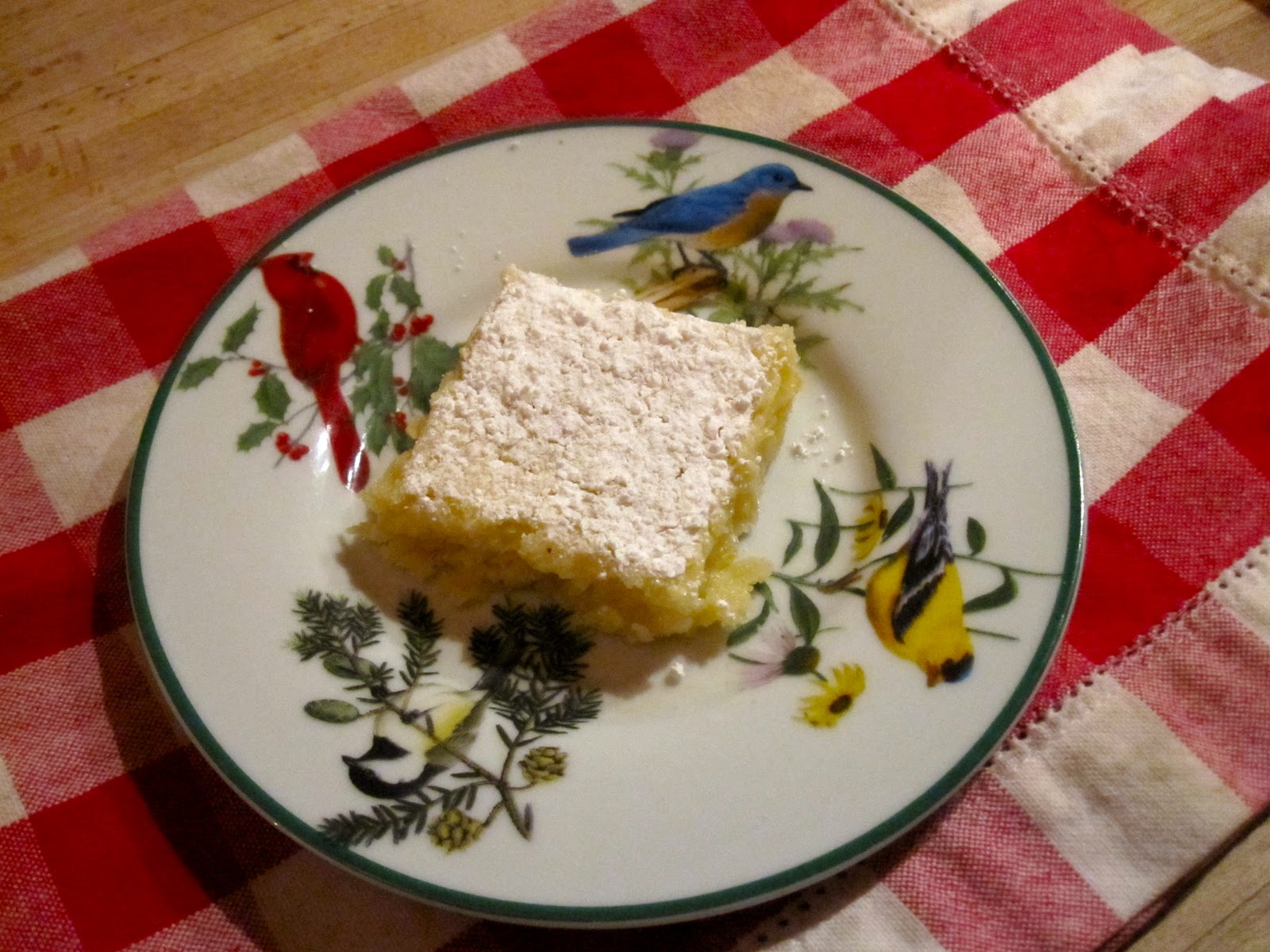
There are many different recipes for what is traditionally in the South called Lemon Squares. What I like best about this recipe is its name. Isn’t it just wonderful? In addition, they are just lusciously delicious.
Crust:
½ cup (1 stick) butter, at room temperature
1 cup flour
¼ cup sugar
¼ teaspoon salt
1. Mix all ingredients in a food processor, with a mixer or with your hands.
2. Pat into a well-greased 9x9 or 9x11 pan (for a thinner crust). Bake 15 minutes in 350ºF oven until the crust is a light brown. Cool slightly.
Topping:
3 eggs
1 cup sugar
3 tablespoons flour
¾ teaspoon baking powder
½ teaspoon salt
Zest from 2 lemons, see photos if you need them
Juice from 2 lemons
Confectioners’ sugar to dust
1. If you’ve used a food processor to make the crust, don’t bother to wash it before you do this next step. Process or beat eggs until light; beat in sugar, adding slowly. Mix in the rest of the ingredients and pour into the pan.
2. Bake in 350ºF oven for 25 minutes or until the topping is set.
3. When cool, dust with confectioners’ sugar. If your confectioners’ sugar is lumpy, put a small amount in a sieve and sprinkle it over the squares, squashing the lumps through the sieve with your fingers. Cut into squares with a wet knife.
Makes 16-20 squares in a 9x9 pan
Adapted from the Junior League of Roanoke Valley Virginia's Of Pots and Pipkins: Recipes
Crust:
½ cup (1 stick) butter, at room temperature
1 cup flour
¼ cup sugar
¼ teaspoon salt
1. Mix all ingredients in a food processor, with a mixer or with your hands.
2. Pat into a well-greased 9x9 or 9x11 pan (for a thinner crust). Bake 15 minutes in 350ºF oven until the crust is a light brown. Cool slightly.
Topping:
3 eggs
1 cup sugar
3 tablespoons flour
¾ teaspoon baking powder
½ teaspoon salt
Zest from 2 lemons, see photos if you need them
Juice from 2 lemons
Confectioners’ sugar to dust
1. If you’ve used a food processor to make the crust, don’t bother to wash it before you do this next step. Process or beat eggs until light; beat in sugar, adding slowly. Mix in the rest of the ingredients and pour into the pan.
2. Bake in 350ºF oven for 25 minutes or until the topping is set.
3. When cool, dust with confectioners’ sugar. If your confectioners’ sugar is lumpy, put a small amount in a sieve and sprinkle it over the squares, squashing the lumps through the sieve with your fingers. Cut into squares with a wet knife.
Makes 16-20 squares in a 9x9 pan
Adapted from the Junior League of Roanoke Valley Virginia's Of Pots and Pipkins: Recipes
Subscribe to:
Posts (Atom)