Showing posts with label Italian. Show all posts

Thursday, March 31, 2011

Pork Piccata

This is an old stand-by because it is fast and delicious. But I have had problems with it in the last couple of years as the pork we get is leaner and leaner--perhaps good for our health--but definitely not as succulent and juicy. So I've tried to find less lean pork (I bought part of a piggy which had been raised organically by students at Sonoma Valley High School and it worked really well) and cook it as short a time as possible.


1½ pounds pork butt or boneless pork chops, sliced ¼ to ½-inch thin
Note: I look for pork that has some marbling of fat in the meat. Boneless pork chops work well if they have some fat in the meat. If it is too lean, the meat dries out in an instant.
¼ teaspoon pepper
1 teaspoon salt
½ cup flour
3 tablespoons olive oil
4 garlic cloves, slivered
Note: You can use more garlic if you are a true garlic-lover.
Zest of 1 lemon, zester or microplane but I prefer the zester, see photos if you need them
Juice of 1 lemon
¾ cup white wine
2 tablespoons capers
3 tablespoons chopped flat-leaf parsley

1. This dish cooks so fast, you really need to have all the ingredients prepped and set to go before you start cooking. So sliver the garlic, zest the lemon, juice it, measure the capers and the white wine, and chop the parsley. There, you’re set.
2. Mix the salt, pepper and the flour in a clean plastic sack. Dredge the pork a few slices at a time and lay in a single layer on a plate. Sprinkle with more salt and pepper.
3. In a large frying pan, heat the olive oil. Add the garlic and fry until lightly brown. Remove it from the pan and set aside, leaving as much of the oil as possible.
4. In the same oil, lightly brown the pork slices on both sides in one or more batches, about 1 minute on each side or a little longer if the meat is thicker. Remove the pork from the pan as it finishes. The meat will continue to cook while it sits.
5. Add the lemon juice, white wine, capers, lemon zest and reserved garlic to the pan, set over medium heat, scraping up any browned bits in the pan. Reduce the sauce for just a moment, taste for seasonings and adjust as you see fit.
6. Return the meat to the pan for a minute, shaking the pan a bit so that the sauce is thickened by the flour on the meat. The meat should be slightly pink in the middle.
7. Place on warmed plates or a serving platter. Sprinkle with parsley and serve immediately.

4-6servings
Adapted from Jeff Smith’s The Frugal Gourmet

Here is what a zester looks like:


You might to add the following dishes  to make a wonderful supper:

Oven-roasted Zucchini


 Coconut Rice


Bacon-Tomato-Corn Ragout with Creamy Polenta

My sweetheart, Katherine, is a great fan of one-dish meals. Or rather one-plate meals. She is after all the  dishwasher in the household and her job is made considerably easier with a one plate dinner. Some pots and pans, of course, but not as many, and two plates which can be tucked into the dishwasher without much fuss. More importantly, though, I think that her spirit is nourished by a meal that is less complicated, by one dish with abundant flavor, such as the Bacon-Tomato-Corn Ragout that follows, on a bed of something soothing and comforting, in this case Creamy Polenta. It is straightforward and delicious. And that’s it.


10 thick bacon slices, cut crosswise into ½-inch pieces
Note: Buy the best you can like Niman Ranch or a good local producer
2 tablespoons olive oil or bacon fat
2 medium onions, sliced
Pinch of red pepper flakes or smoky hot paprika
2 cups fresh corn kernels (about 3 ears) or frozen corn if you are desperate
7 Roma tomatoes, peeled if you want, seeded, cored and coarsely chopped
Note: I tried heirloom tomatoes. They were too juicy for this dish. If you want to use them, drain them really well before adding to the ragout.
½ cup chopped fresh basil
½ cup shredded basil for garnish, see instructions
Fleur de sel or other large grain finishing salt
One recipe of Creamy Polenta

1. In a medium skillet, cook the bacon pieces over low to medium-low heat, turning to achieve uniform crispness. Transfer to a paper towel to drain.
2. In a large skillet, heat the olive oil or some bacon fat over medium heat. Add the onions and red pepper flakes or paprika, reduce the heat to medium-low and sauté until they are soft and amber, at least 20 minutes.
3. Add the corn, increase the heat to medium, and cook for 5 minutes. Stir in the tomatoes and three-fourths of the bacon pieces and continue to cook, stirring frequently for 5 minutes. Add a little more bacon fat if you think the dish needs it for heightened flavor. Stir in the chopped basil.
4. Reheat the Creamy Polenta and make soft flat mounds in the middle of 4 warm plates. Spoon the ragout over the top. Sprinkle with the shredded basil, the remaining bacon pieces, and a sprinkling of fleur de sel or other salt.

4-5 Servings
Adapted from Sara Perry’s Everything Tastes Better with Bacon

Creamy Polenta

Polenta, Sausage and Tomato Layers

This is one of those incredibly versatile dishes which is easy to prepare, immensely likable to just about every age group--especially teenage boys--with ingredients that can pretty much live in your cupboard or fridge. The better the ingredients you use in the dish, the better the result.


1 recipe Creamy Polenta
½ cup grated Parmesan cheese
4 fresh uncooked sweet Italian sausages, skin removed, coarsely chopped
Note: If your Italian sausages are not flavored with fennel seed, you can add ¼ teaspoon fennel seed to the sausage as you cook it
1½ cups home-made tomato sauce or a good one in a jar
12 ounces fresh mozzarella cheese, sliced ¼ to ½ inch thick
¼ teaspoon black pepper or Aleppo pepper

1. Make the polenta.
2. Preheat oven to 375ºF. Butter a 2½-quart flameproof casserole.
3. Add ¼ cup Parmesan cheese to the hot polenta. Stir well. Pour into the prepared casserole. Sprinkle with 2 tablespoons of Parmesan.
4. While the polenta is cooking, sauté the sausage over medium heat, breaking up the pieces with a wooden spoon, until browned and cooked through, about 10 minutes. Remove from the heat.
5. Add the sausage to the casserole on top of the polenta, forming an even layer. Spoon on the tomato sauce, and sprinkle with the remaining 2 tablespoons Parmesan. Top with the mozzarella in an even layer. Sprinkle the mozzarella with black or Aleppo pepper (or both).
6. Bake until bubbling, about 30 minutes. If the top is not browned to your liking, place the casserole under the broiler until browned, watching it carefully. Let stand for 10 minutes before serving.

6 servings
Adapted from Julee Rosso and Sheila Lukins’ The New Basics

Creamy Polenta

Italian Sausages with Lentils


For the lentils:
1-2 tablespoons olive oil
1 onion, finely chopped
Sprinkling of salt
2 cups dried Puy lentils (green or black or a mixture)
1 bay leaf
6 sprigs of fresh thyme
½ cup red wine
3 cups stock or water to cover the lentils
Salt and pepper to taste

For the sausages:
1-2 tablespoons olive oil
2 large garlic cloves, peeled and smashed
6 fresh uncooked sweet Italian sausages
½ cup red wine
¼ cup water or stock
Flat-leaf parsley for garnish

1. To cook the lentils, put 2-3 tablespoons of oil into a good-sized pan or a Bram pot over low heat. When it’s warm, add the chopped onion and sprinkle with salt. Cook over a low heat until the onions are soft but not browned, about 10 to 15 minutes. Add the lentils, bay leaf, and thyme sprigs, stir well, and cover generously with the red wine and the stock or water. Bring to a boil, cover, and simmer gently for 30-50 minutes or until the lentils are cooked and most of the liquid’s absorbed, stirring occasionally. Add salt and pepper to taste. You can make this ahead. Reheat when you’re ready to proceed.
2. To cook the sausages, add 1-2 tablespoons olive oil and the smashed garlic cloves to a heavy frying pan, and fry for a few minutes. Add the sausages and brown on all sides. Add the wine and stock, bring to a boil, and then turn down the heat, cover the pan and simmer the sausages for about 15 minutes, turning mid-way. When the sausages are done, cut in half on the diagonal, add them to the lentils. Mash the garlic into the remaining liquid and add it to the lentil pot. Taste for seasoning and adjust with salt, pepper, or more liquid until it is to your liking.
3. Before serving, reheat the lentil and sausage mixture over low heat. Sprinkle with parsley.

4-6 servings
Adapted from Nigella Lawson’s Nigella Bites

Italian Sausages with Red Grapes

I truly love good sausage and I find them one of the quickest ways to get a delicious meal on the table. This recipe is no exception. The polenta will take you a bit of time but a nice loaf of bread would work just as well. A salad or some spinach and you're done.


1 medium onion, sliced
2 tablespoons olive oil
1 pound fresh uncooked sweet Italian sausage (about 4-5 sausages)
Note: I buy Caggiano Sweet Italian in Sonoma; buy fresh good quality Italian sausage, usually with fennel seed, where ever you are.
1 pound seedless red grapes, stemmed
Note: You can also use 1 cup Oven-Roasted Grapes.
2 tablespoons balsamic vinegar
1 tablespoon finely chopped rosemary or thyme
Salt and pepper to taste

1. Heat 1 tablespoon of olive oil in a heavy 10-inch skillet, add the onions, and cook until they are soft and amber. Remove from the pan and set aside.
2. Heat remaining olive oil in the same skillet over moderate heat until hot. Brown the sausages on all sides, poking them with a fork each time you turn them. This will take about 8 minutes.
3. Add ½ cup water to the pan, cover and turn the heat to low. Simmer the sausages until they are cooked through, about 10 minutes, turning once. Remove all but ¼ cup of the remaining liquid.
4. Add grapes and cook, stirring occasionally, until grapes are softened, 5 minutes or so. If using Oven-Roasted Grapes, you only need to cook them for a few minutes to warm them up.
5. Remove the sausages from the pan. Add the reserved onions, half of the rosemary or thyme, and the vinegar to the grapes and stir to mix everything together. Taste for salt and pepper and add as you see fit.
6. Cut the sausages in half and return to the pan. Heat briefly until everything is nicely hot. Sprinkle with remaining rosemary or thyme.

4 servings
Adapted from Gourmet Magazine, October 2005

Creamy Polenta
You can add to the polenta in place of some of the milk the liquid in which the sausages have cooked.

Linguine with Lemon Sauce


4 tablespoons butter, at room temperature
1½ cups heavy cream
Grated zest from 3 lemons, see photos below of the zester and the zest
Lemon juice from 3 lemons
1 pound fresh linguine
OR
9 ounces dried thin spaghetti
3 tablespoons salt for the pasta water
1 teaspoon salt for the sauce or to taste
3 tablespoons fresh flat-leaf parsley, coarsely chopped
Parmigiano-Reggiano cheese or other hard cheese, freshly grated at the table

1. Put 6 quarts of water in a large pot and bring it to a boil.
2. While the water is coming to a boil, combine the butter, cream, and lemon juice over low heat in a skillet large enough to hold the pasta later on. As soon as the butter is melted, remove the skillet from the heat, cover, and set aside.
3. When the water is boiling, add 3 tablespoons salt and the pasta, stirring to prevent the pasta from sticking. Cook until tender (fresh pasta won’t take long). Drain, leaving a few drops of water clinging to the pasta so that the sauce will adhere.

4. Transfer the pasta to the skillet, off the heat, and toss to blend. Add the salt, lemon zest, and toss once more. Cover and let rest for 1 to 2 minutes to allow the pasta to absorb the sauce. Transfer to warmed shallow bowls, sprinkle with parsley, and serve immediately. Pass the hunk of cheese with a microplane or a cheese grater for you and your guests to grate as desired.

3-4 servings as a main dish
Adapted from Patricia Wells’ Trattoria

The zester. Of course, you can also use a microplane if you want tiny pieces of zest.
The zest. This is just one lemon's worth.


So great with the silkiness of the pasta:

Simple Sautéed Fresh Spinach or Swiss Chard

Pesto with Pasta


¾ cup freshly grated Parmesan plus more to grate at the table
Note: If you need to grate your Parmesan, do it first in the food processor before proceeding with the rest of the recipe.
4 packed cups fresh basil leaves
2 large garlic cloves, peeled and coarsely chopped
½ cup pine nuts (you can substitute slivered almonds)
2 tablespoons melted butter
1/3 cup olive oil
Salt to taste

1. Combine the cheese, basil, garlic, and nuts in a food processor and process until the mixture is well combined.
2. Add the melted butter with the motor running and up to 1/3 cup olive oil. You can also add a small amount of water if the pesto is too thick. It should drape nicely over a mound of pasta without being runny. Add salt to taste.
3. Serve with hot drained pasta. You can pass more cheese at the table.

4-6 servings
Adapted from Mollie Katzen’s Moosewood Cookbook

Oven-Roasted Tomatoes
Tasty with pesto and a perfect color on the plate.

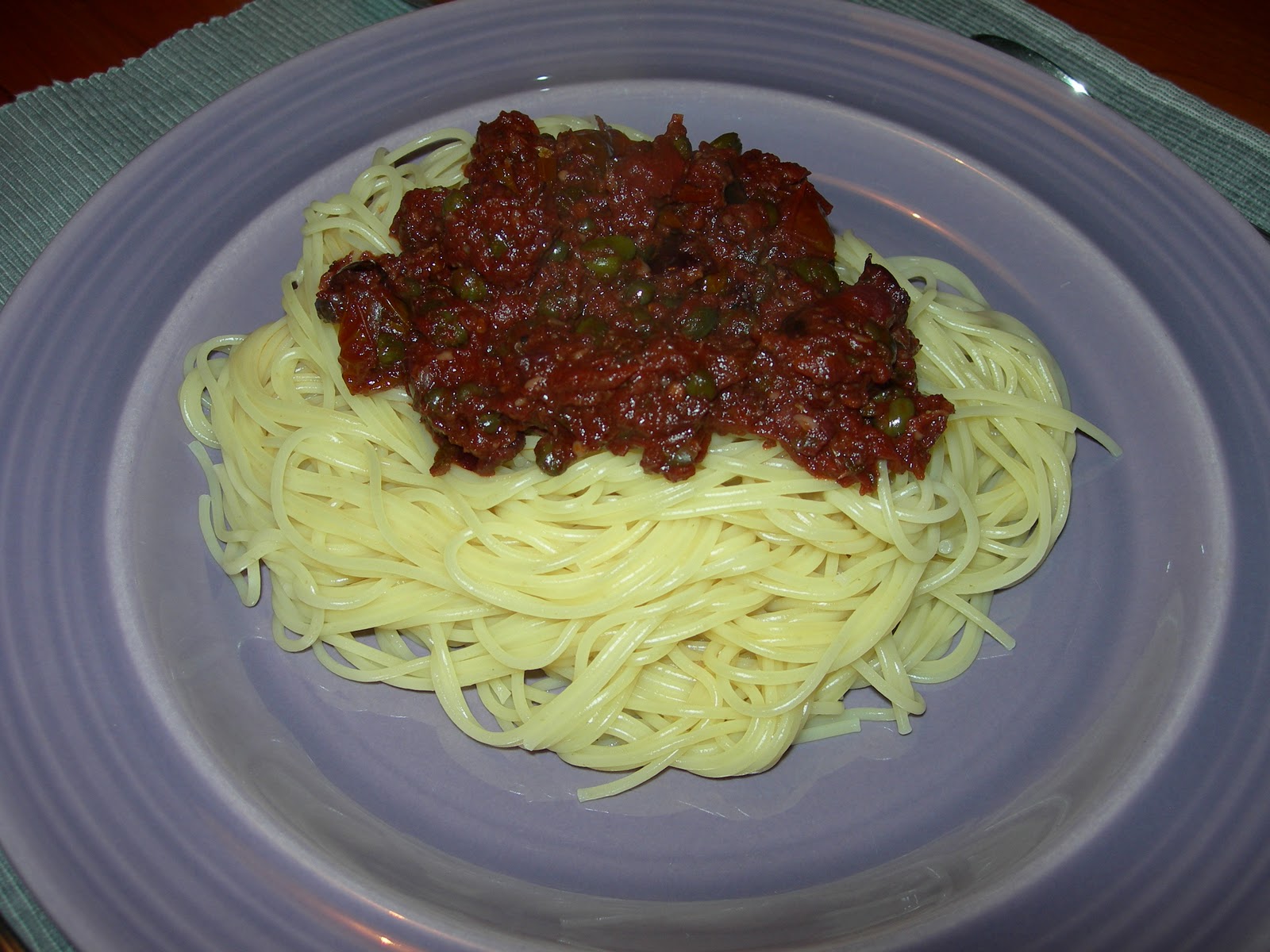
Puttanesca Sauce


1 can (2 ounces) anchovy fillets, undrained
12 garlic cloves, pressed
2 cans (28 ounces each) plum tomatoes
OR
4 pounds fresh tomatoes, peeled, seeded saving the juice, see instructions if you need them, coarsely chopped
¼ cup sun dried tomatoes, chopped
1/3 cup capers, drained
1 cup pitted Kalamata olives, coarsely chopped
1 cup dry red wine
Crushed red pepper flakes to taste
½ teaspoon sugar
2 tablespoons fresh sage, chopped
¼ cup balsamic or red wine vinegar
Pepper

1. Place the anchovies and the garlic in a heavy large sauce pan or sauté pan. Mash thoroughly into a paste over low heat. Use a knife and fork to cut into pieces if necessary.
2. Add the tomatoes, capers and olives; stir over medium high heat.
3. Add the remaining ingredients and bring to a boil; reduce the heat to medium low and simmer, uncovered, for 1 hour. With fresh tomatoes and their juice, it might take two hours depending on their juiciness. The sauce should be nice and thick.
4. Taste and adjust the seasonings. Serve over thin spaghetti. Traditionally this dish is served without cheese, but who’s stopping you if you want it.

Note: You probably won’t need salt because of the saltiness of the anchovies, capers and olives. But taste to make sure.

6 servings
Adapted from Julee Rosso’s Great Good Food

Penne with a Slow-Cooked Sausage Sauce

When summer draws to a close and there is just the first hint of autumn in the air, I get hungry for pasta, especially the ones calling for a lot of fresh tomatoes. With a really simple salad, it is the perfect dinner.


2 tablespoons olive oil
8 fresh uncooked sweet Italian sausages, meat removed from skins and crumbled
Note: I use Caggiano Sweet Italian sausage from Sonoma Market.
2 small red onions, peeled and chopped
2 garlic cloves, peeled and chopped
1 or 2 small dried hot chile pepper, seeds removed if you desire
2 bay leaves
1 cup dry red wine (preferably Chianti or Sangiovese)
1 28-ounce can peeled plum tomatoes
OR
2 pounds fresh tomatoes, peeled, seeded, and coarsely chopped, see instructions if you need them
½ teaspoon ground nutmeg (or grate your own)
Salt and pepper to taste
¾ cup heavy cream
1 heaping cup freshly grated Parmesan cheese and more for the table
11 ounces penne rigate

1. Heat the oil in a large pan and sauté the sausage meat, stirring and breaking up the pieces. When the meat is cooked, add the onions, garlic, chiles, and bay leaves. Cook gently for 20 minutes or until the onions are soft and translucent.
2. Pour in the wine, increase the heat and cook until the wine evaporates.
3. Add the tomatoes, lower the heat and simmer gently until the sauce is thick, an hour or more depending on the juiciness of your tomatoes.
4. Season with nutmeg, salt and pepper. Add the cream and keep warm over a very low heat.
5. Cook the penne until al dente. Drain well. Place it in a warm bowl and add the sauce and cheese. Stir together and serve with additional cheese.

4-6 servings
Adapted from Rose Gray and Ruth Rogers’ Rogers Gray Italian Country Cook Book

A great accompaniment:

Everyday Green Salad with Everyday Salad Dressing

Wednesday, March 30, 2011

Spicy Shrimp with Garlic and Oil

This is a really wonderful summertime menu. Spicy Shrimp with Garlic and Oil, a loaf of crusty bread, your favorite salad or the Cherry Tomato, Mozzarella, and Corn Salad, with a delicious Berry Crumble for dessert. If you want to fancy it up a bit, you could add a first course of cold Yogurt and Cucumber Soup. You can find the links below. Happy eating.

I love the ease of cooking shrimp in their shells. Peeling and deveining shrimp is not one of my favorite kitchen activities. I also love sucking the juices off the shrimp before peeling them at the table. Peeling them slows me down and makes me anticipate and then fully appreciate their luscious flavor.


1 pound large or medium shrimp, in their shells
1/3 cup olive oil
6 cloves garlic or more if you are a garlic lover, slivered
1 tablespoon fresh thyme leaves or 1 teaspoon dried thyme in a pinch
¼ teaspoon crushed red peppers or ½ teaspoon smoky hot paprika
½ teaspoon salt or to taste
2 tablespoons chopped flat-leaf parsley

1. Rinse the shrimp and pat them dry.
2. In a skillet large enough to hold all the shrimp in a single layer, heat the oil over moderately high heat. When the oil is hot but not smoking, add the garlic, thyme, crushed red peppers or paprika, salt and shrimp. Toss to coat with oil, cook, stirring occasionally, just until the shrimp are pink, 4 to 5 minutes.
3. Remove the pan from the heat, and with a slotted spoon, transfer the shrimp to a warmed serving platter or to warmed individual plates. Pour the sauce over the shrimp, sprinkle lightly with the parsley. Serve immediately with paper napkins and plenty of bread to sop up the sauce.

3-4 servings for dinner
Adapted from Patricia Wells’ Trattoria

Yogurt and Cucumber Soup


 Cherry Tomato, Mozzarella and Corn Salad


Individual Blackberry Crumbles

Saturday, March 26, 2011

Oven-Roasted Zucchini


8 medium zucchini, thickly sliced (½ inch) on the bias
2 tablespoons olive oil
2 garlic cloves, pressed
OR
2 roasted garlic cloves, chopped, and 1 fresh garlic clove, pressed
2 tablespoons chopped fresh flat-leaf parsley
6 fresh basil leaves, chopped or ¼ cup chopped herbs of your choice
Note: Tarragon and chervil or tarragon and thyme or oregano and thyme or dill are all good.
Zest of 1 lemon, see photos if you need them
Juice of ½ lemon
Salt and pepper

1. Place the zucchini in a roasting pan(s). Add the olive oil, toss to coat, and arrange in a single layer. Sprinkle lightly with salt. Put the pan(s) in the oven and turn the temperature to 425ºF. Roast for 30-40 minutes, turning once mid-way. The zucchini should be nice and brown on both sides.
2. Mix together the garlic, parsley, lemon zest, and herbs.
3. Make a layer of some of the zucchini slices on a serving dish. Sprinkle with some of the herb mixture, season with salt and pepper and drizzle with the lemon juice. Continue making layers until all the ingredients are used, ending with some herbs on top.
4. Set aside in a cool place for about an hour for the flavors to mingle before serving. Can serve warm or at room temperature. To warm slightly, put the dish in a microwave and heat for 1-2 minutes.

Note: I have made just steps 1 and 2 of this recipe with salt added along with the olive oil. Even at its most simple, it is a delicious dish.

4-5 servings
Adapted from The Silver Spoon, a comprehensive cookbook of Italian food

Tuesday, March 22, 2011

Buttermilk Panna Cotta

A cool and refreshing Italian treat on a summer evening with the wonderful hit of concentrated strawberry flavor from Roasted Strawberries.


1½ cups half and half or whole milk
½ cup sugar
Grated zest of 2 lemons or 1 lemon and 1 orange, best to use a microplane
2 cinnamon sticks
1 envelope unflavored gelatin
3 tablespoons cold water
¼ teaspoon salt
¾ cup buttermilk
Fresh strawberries or Roasted Strawberries
Fresh mint for garnish

1. Warm the half and half, sugar, zest, and cinnamon sticks in a non-reactive saucepan. Once the mixture begins to steam, remove it from the heat, cover, and let steep for 30 to 60 minutes.
2. In a medium-sized bowl, sprinkle the gelatin over the cold water and let it soften for 5 minutes.
3. Rewarm the infused half and half, then pour it through a strainer over the softened gelatin, stirring to dissolve it completely. Press the zest to release as much of the liquid as possible. Add the salt. Let the mixture cool.
4. Stir in the buttermilk. (If the mixture is steaming hot when you add the buttermilk, the mixture can separate. If it does, whisk it vigorously until it is smooth.)
5. Lightly grease 5 or 6 4-ounce ramekins with unflavored oil. (If you use smaller ramekins, you’ll make more desserts.) Divide the panna cotta mixture evenly among the prepared ramekins and refrigerate for at least 4 hours.
6. To serve, run a sharp knife around the inside edge of each ramekin to release the panna cotta. Invert each one on a serving plate. Spoon the strawberries (roasted or fresh) around it. Add a sprig of fresh mint if you like.

5-6 servings in 4-ounce ramekins
Adapted from David Lebovitz’s Ripe for Dessert
He serves his with a blueberry sauce.

Italian Lemon Ice

I find it best to start this process in the morning before serving for dessert at dinner—just to make sure the mixture freezes sufficiently. It is the perfect dessert after a heavy meal or anytime during the summer. Light and refreshing.


1½ cups water
1 cup plus 2 tablespoons sugar
1 tablespoon finely grated fresh lemon zest, best done with a microplane
1 cup fresh lemon juice
Pinch of salt

1. Bring the water and sugar to a boil in a 1-quart heavy saucepan, stirring until the sugar has dissolved.
2. Remove from the heat and stir in the zest, juice, and salt.
3. Transfer to a metal bowl and cool the syrup to room temperature. Refrigerate the syrup for at least one hour.
OR
If you are in a rush, as I usually am, you can put the bowl containing the mixture into a larger bowl filled with ice to cool it down more quickly.
4. Freeze the syrup in an ice cream maker.
OR what I usually do
Line an 8 x 8 metal pan with plastic wrap and pour the cooled mixture into it. Place it in the freezer of your refrigerator. Periodically, pull the pan out of the freezer (two or three times) and stir the mixture to break up the ice crystals.
5. Transfer to an air-tight container and freeze until firm, about two hours. Remove from the freezer about 5 minutes before serving.

Makes about 1 quart
Adapted from Ruth Reichl’s The Gourmet Cookbook